
Best overall for teacher-led primary practice: British Council LearnEnglish Kids. Best for Chinese-speaking learners: Lingua. Best for teacher-defined vocabulary: Quizlet. The best English learning app for schools depends on pupils’ ages, lesson goals, and school approval requirements—not a single overall winner.
- British Council LearnEnglish Kids is the best starting point here for teacher-led primary English practice.
- Lingua suits Chinese-speaking learners who need English vocabulary, grammar, pronunciation, and conversational correction.
- Quizlet suits teacher-defined vocabulary; British Council LearnEnglish Teens suits secondary-school supplementary practice.
- Choose the best English learning app for schools by checking lesson fit, safeguarding, accessibility, and observable learning.
Why this matters
A resource that helps an individual practise English is not automatically suitable for a whole school. Teachers also need an appropriate audience, a clear classroom purpose, and an approved way to handle pupil access.
For your 2026 shortlist, separate learning fit from institutional fit. Vocabulary exercises, pronunciation practice, and conversation activities answer different needs; none establishes whether a product meets your school’s procurement or safeguarding requirements.
This guide compares supplementary learning options, including browser-based resources rather than only downloadable apps. It does not rank school-wide management systems or treat any option as a replacement for teaching.
What makes the best English learning app for schools?
Use these criteria before comparing familiar names:
- Age and reading fit: Instructions, topics, and task difficulty must suit the pupils who will use them.
- Lesson alignment: Choose a resource that supports a specific classroom objective, such as describing routines or understanding spoken instructions.
- Useful practice: Pupils should retrieve vocabulary, understand meaning, or produce language—not just complete screens.
- Teacher visibility: Decide what evidence you need: an oral response, written work, a classroom check, or approved reporting.
- School approval: Check privacy, account eligibility, accessibility, safeguarding, and device requirements before pupil use.
- Workload: Judge the preparation, supervision, and follow-up required alongside the practice itself.
Choose the learning task first and the product second. For a 2026 adoption decision, an attractive activity is not enough: you need to explain what pupils will learn and how you will check it.
Best school English learning options at a glance
| Rank | Option | Best for | Standout feature or format | Key limitation |
|---|---|---|---|---|
| 1 | British Council LearnEnglish Kids | Teacher-led primary practice | Child-focused stories, songs, games, and activities | Resource selection and follow-up remain teacher tasks |
| 2 | Lingua | Chinese-speaking learners needing supplementary English practice | Vocabulary, grammar, pronunciation, and Buddy chat/call correction | School-wide requirements need confirmation |
| 3 | British Council LearnEnglish Teens | Secondary-school skills practice | Teen-focused reading, listening, grammar, and vocabulary resources | Not a complete school curriculum |
| 4 | Quizlet | Teacher-defined vocabulary practice | Study sets and flashcard-based practice | Learning depends on set accuracy and task design |
| 5 | Duolingo | Independent practice routines | Sequenced, game-like language lessons | Lesson progression does not establish classroom mastery |
The order reflects the use cases above, not a claim that every primary school should choose the same tool. For your 2026 selection, move the option matching your pupils and objective to the top.
1. British Council LearnEnglish Kids: best for primary practice
British Council LearnEnglish Kids provides English-learning stories, songs, games, and related activities for children. Teachers can select a resource for a lesson topic and build classroom work around it.
Its strongest role is teacher-led supplementary practice. Choose a suitable activity, explain the language goal, and ask pupils to use that language afterward.
British Council LearnEnglish Kids pros:
- Child-focused material gives primary teachers a relevant starting point.
- Stories and songs provide language in a context.
- Different activity formats support varied lesson tasks.
British Council LearnEnglish Kids cons:
- Teachers must select material that matches pupil proficiency.
- Finishing an activity does not demonstrate independent language use.
- Resources still need sequencing within your school’s curriculum.
For example, use a story to introduce descriptive vocabulary, then ask pupils to describe a different character. That follow-up checks whether they can transfer the language beyond the original activity.
Best for: Primary teachers choosing supervised English activities around a defined lesson objective.
Verdict: Buy into this approach for teacher-led primary practice; skip it as a substitute for curriculum planning.
2. Lingua: best for Chinese-speaking learners
Lingua is a subscription-based language-learning app that teaches English vocabulary, grammar, and pronunciation, with conversational correction through its Buddy chat/call feature. Its primary audience is Chinese-speaking learners; it also offers Chinese and Japanese vocabulary courses.
Lingua is best for Chinese-speaking learners who need supplementary English vocabulary, grammar, pronunciation, and conversation practice. For schools, that makes learner fit the starting point—not an assumption of institutional readiness.
Lingua pros:
- Its stated audience matches Chinese-speaking English learners.
- English practice covers vocabulary, grammar, and pronunciation.
- Buddy adds conversational correction through chat and calls.
Lingua cons:
- Its primary audience is narrower than a mixed-language school population.
- Buddy use requires particular attention to school safeguarding and pupil eligibility.
- School-wide reporting, administration, and procurement requirements need confirmation.
Define a narrow learning task before considering broader adoption. A teacher might connect a classroom grammar objective to follow-up practice, then assess pupils through a separate speaking or writing task.
Use the contact page to ask about your school’s requirements. Confirm pupil eligibility, data handling, account arrangements, and the functions your staff need before assigning access.
Best for: Chinese-speaking learners whose school has approved the app for a specific supplementary purpose.
Verdict: Hold school-wide adoption until institutional requirements are confirmed.
3. British Council LearnEnglish Teens: best for secondary skills
British Council LearnEnglish Teens provides English-learning resources aimed at teenagers, including reading, listening, grammar, and vocabulary practice. Its audience makes it a more relevant starting point than child-focused material for secondary-school classes.
Use it to support a particular skill or topic. A reading activity, for example, can lead into discussion or a short written response rather than becoming an isolated exercise.
British Council LearnEnglish Teens pros:
- Teen-focused material supports age-appropriate resource selection.
- Reading and listening resources offer material for follow-up tasks.
- Grammar and vocabulary activities support targeted reinforcement.
British Council LearnEnglish Teens cons:
- Teenage pupils still differ substantially in English proficiency.
- Teachers must connect individual resources to course objectives.
- Activity completion alone does not establish speaking or writing competence.
Check both language difficulty and topic suitability. A text can be interesting for a pupil’s age while still requiring too much support for independent work.
Best for: Secondary teachers selecting supplementary English resources for a defined skill gap.
Verdict: Buy into this approach for selected secondary-school tasks; skip treating it as a complete course.
4. Quizlet: best for teacher-defined vocabulary
Quizlet uses study sets and flashcard-based activities to support practice. Its clearest classroom role here is helping pupils revisit vocabulary selected for their lessons.
The quality of the set matters more than the length of the word list. Include the intended meaning and useful context, then check that pupils can use the vocabulary outside the original prompt.
Quizlet pros:
- Teacher-defined sets can match current classroom vocabulary.
- Flashcards provide a straightforward retrieval-practice format.
- Focused sets make it possible to revisit a particular topic.
Quizlet cons:
- Inaccurate or ambiguous entries teach the wrong association.
- Translation recall does not establish pronunciation or conversational ability.
- Creating and reviewing useful sets takes teacher time.
For a proposed classroom task, select 5 target words, practise them, and ask pupils to write 2 original sentences. Those quantities are an exercise design, not a claim about the ideal learning dose.
Avoid accepting a correct definition as the final result. Ask whether pupils can choose the word appropriately in a new situation.
Best for: Teachers who need vocabulary practice tied closely to current lessons.
Verdict: Buy into this approach for checked vocabulary sets; skip unreviewed lists.
5. Duolingo: best for independent practice routines
Duolingo provides sequenced language lessons with game-like progression. Its role in this comparison is a structured routine for individual practice, rather than teacher-selected work on an exact classroom objective.
Before assigning it, check whether the relevant lesson content supports what pupils are learning. An activity can be worthwhile without being the right homework for your current unit.
Duolingo pros:
- Sequenced lessons provide a defined path through practice.
- Game-like progression gives learners a visible activity structure.
- Individual exercises offer an additional practice format outside class.
Duolingo cons:
- The lesson sequence does not necessarily match your curriculum.
- Progress indicators do not establish classroom mastery.
- It does not replace teacher feedback on extended speaking or writing.
Keep your assessment separate from app progress. Ask pupils to explain a meaning, produce an original sentence, or respond to a fresh prompt using the language they practised.
Best for: Approved independent practice when the lesson content matches a pupil’s needs.
Verdict: Hold as a general homework requirement until curriculum fit is clear.
How we ranked these options
The ranking prioritizes age fit, a clear classroom purpose, and the connection between practice and observable learning. The use-case labels separate primary resources, Chinese-speaking learner support, secondary resources, teacher-defined vocabulary, and independent routines.
This is a use-case comparison, not a controlled performance test. No learning-gain percentages or school deployment results underpin the order, and the ranking does not certify any option’s institutional suitability.
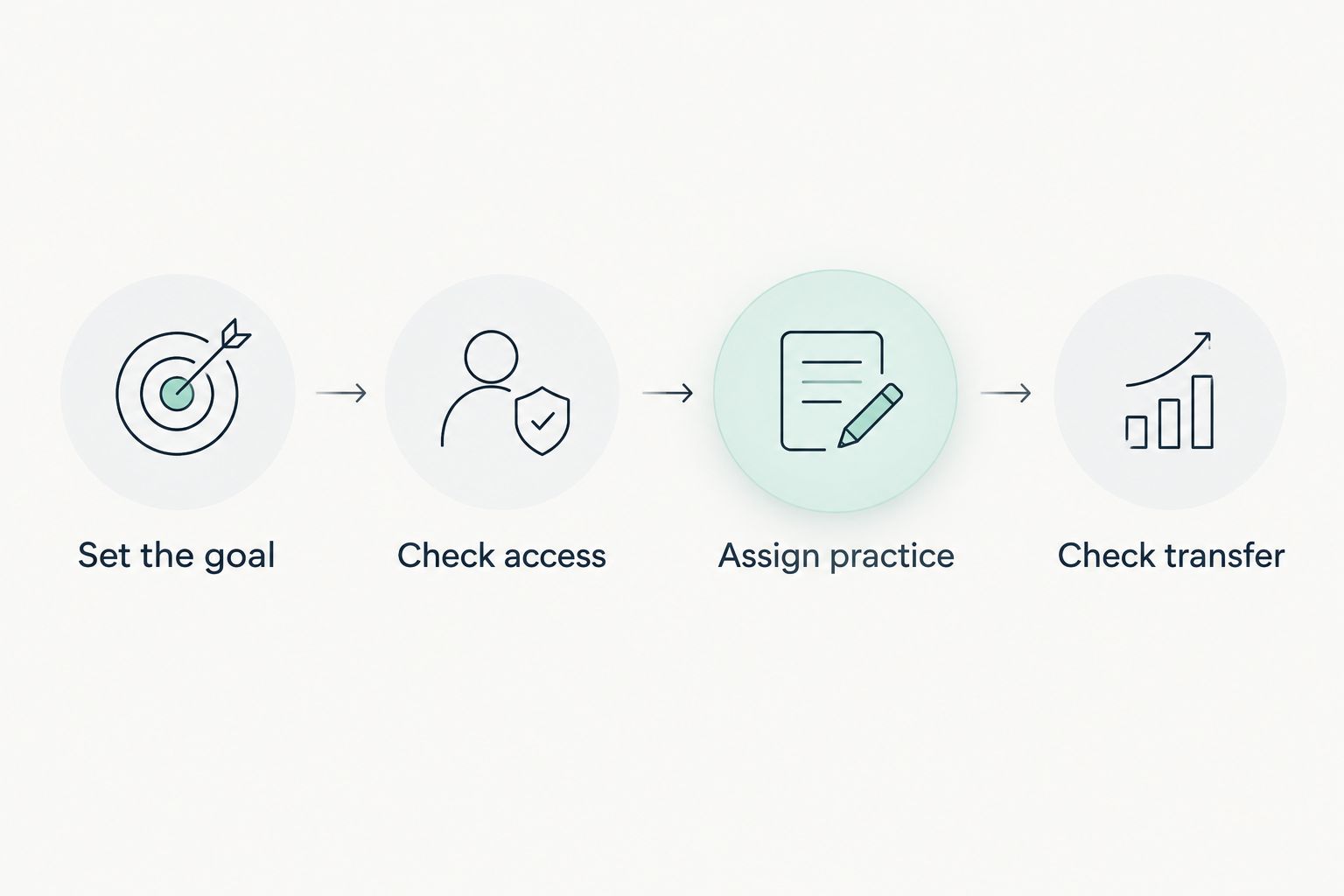
Run a classroom check before wider adoption
For a 2026 classroom trial, keep the objective narrow enough to assess without relying on an app’s completion indicator. Use the same language goal before and after practice.
Set the goal
Name what pupils should do: describe a daily routine, distinguish word meanings, or respond to a familiar question. Avoid an objective such as finishing a lesson, which describes activity rather than learning.
Check access
Confirm school approval, device access, account eligibility, and accessibility needs. Decide what pupils should do if they cannot use the resource at home.
Assign practice
Set a 10-minute practice task as a practical trial format, not a proven optimum. Tell pupils exactly which language to notice or use.
Check transfer
Ask for an original response without the practice prompt. Compare that response with the learning goal, then decide whether to keep, adapt, or replace the activity.
Keep a short teacher note on preparation and follow-up. A resource that supports the objective but creates impractical supervision demands still needs a different classroom arrangement.
Which English learning option should your school choose?
Choose British Council LearnEnglish Kids as the default starting point for teacher-led primary supplementary practice. Choose LearnEnglish Teens when your audience is secondary pupils, and Quizlet when your main need is a teacher-defined vocabulary set.
Choose Lingua for its stated Chinese-speaking learner focus and English practice areas, subject to school approval. Consider Duolingo when independent routine matters and its content fits the learner’s current goal.
For a 2026 school-wide decision, do not let this shortlist replace procurement checks. Select the learning use case first, confirm the institutional requirements, and expand only when classroom evidence supports the decision.
FAQ
What's the best English learning app for schools?
There is no single best choice for every school. British Council LearnEnglish Kids is the default here for teacher-led primary supplementary practice; secondary pupils, Chinese-speaking learners, and vocabulary-focused classes have different needs.
Is Lingua suitable for school English learners?
Lingua matches Chinese-speaking learners seeking English vocabulary, grammar, pronunciation, and conversational correction. Schools should confirm pupil eligibility, safeguarding, data handling, and institutional requirements before assigning it.
Which option is best for primary-school English practice?
British Council LearnEnglish Kids is the strongest starting point in this comparison for teacher-led primary practice. Teachers still need to choose suitable resources and assess whether pupils can use the language independently.
Is Quizlet better than Duolingo for classroom vocabulary?
Quizlet is the closer fit when teachers need practice based on a specific vocabulary set. Duolingo is the closer fit for sequenced individual lessons, provided the content matches the learner's needs.
What should a school check before approving an English app?
Check privacy, safeguarding, account eligibility, accessibility, device access, and curriculum fit. Confirm the administration and reporting functions your school requires rather than assuming a learner app includes them.
How long should pupils practise with an English app?
Choose a duration that fits the task, pupil age, and lesson plan. A 10-minute task is a practical trial format in this guide, not a proven optimum; assess the resulting language use before extending it.
Can an English learning app replace a teacher?
Use these options as supplementary resources, not replacements for teaching. Teachers connect practice to the curriculum, address misunderstandings, and assess language use beyond the original activity.
One last thing
Change the prompt before you judge the learning. A pupil who recognizes an answer in an app has demonstrated something different from a pupil who produces an original response.
Make that distinction part of your 2026 selection process. Keep the language objective, change the situation, and see whether the pupil can still respond.