
Best overall: Anki. Best for kanji-led vocabulary: WaniKani. Best for studying Japanese vocabulary alongside English: Lingua. This 2026 guide compares Japanese vocabulary apps by the learning job each handles, from remembering words to understanding them in context.
- Anki is the best Japanese vocabulary app for learners who want control over flashcards and review.
- WaniKani suits learners who want vocabulary organized around kanji study.
- Lingua suits learners who want Japanese vocabulary courses alongside English learning.
- Renshuu suits guided practice; Takoboto suits dictionary lookup rather than a complete study course.
Why this matters
Recognizing a word on a flashcard is not the same as understanding it in a sentence. Japanese vocabulary study involves written forms, readings, meanings and usage; an app that handles one of those well does not automatically handle the others.
Your choice in 2026 should follow your main obstacle. If you forget words you already understand, prioritize review. If kanji makes vocabulary hard to read, prioritize a kanji-based sequence. If you keep looking up unfamiliar expressions, prioritize dictionary access and a way to revisit those words.
Choose the app that fixes your current problem, not the app with the longest feature list. You also need a source of Japanese outside isolated vocabulary exercises, such as graded reading, listening material or lessons.
What makes the best Japanese vocabulary app?
These criteria separate a useful study tool from an app you open without a clear purpose:
- Recall practice: You should attempt an answer before revealing it, rather than repeatedly rereading familiar words.
- Reading support: Japanese words need readings as well as meanings. Kanji recognition alone does not establish pronunciation.
- Context: Example sentences and real encounters help you distinguish words with similar translations.
- Study control: A useful system lets you focus on relevant material without creating an unmanageable review queue.
- Learning sequence: Beginners benefit from an order they can follow; experienced learners often need more freedom.
- Fit with your routine: A dictionary, flashcard system and guided course serve different purposes. Judge each against its actual role.
Do not treat every criterion as equally important. Someone reading manga needs a different vocabulary workflow from someone starting with kana or returning to Japanese after a break.
Japanese vocabulary apps at a glance: 2026
| App | Best for | Standout approach | Key limitation |
|---|---|---|---|
| Anki | Building a personal review system | Customizable flashcards with spaced repetition | You must choose or create suitable material |
| WaniKani | Learning vocabulary through kanji | Structured kanji and vocabulary study using mnemonics | Its sequence is not a substitute for broad Japanese practice |
| Lingua | Combining Japanese vocabulary with English learning | Japanese vocabulary courses alongside English learning | Its stated Japanese offering is vocabulary, not a complete Japanese curriculum |
| Renshuu | Guided vocabulary exercises | Vocabulary study within a wider Japanese-learning environment | Guided exercises still need support from reading and listening |
| Takoboto | Looking up unfamiliar words | Japanese dictionary lookup | Lookup alone does not create a complete learning routine |
The table is a decision aid, not a claim that every app teaches the same thing. Start with your learning task, then read the corresponding recommendation below.
1. Anki: best Japanese vocabulary app for custom review
Anki is a flashcard system with spaced repetition: review timing responds to your answers. You can build your own Japanese cards or use shared decks, then adapt the material to your study goals.
Its main advantage is control. A word from your textbook, a sentence from a story and an expression you heard in a lesson can all become review material. That flexibility also puts responsibility on you to select accurate, useful content.
Anki pros
- You can build a vocabulary collection around material you actually encounter.
- Customizable cards let you separate reading, meaning and sentence-based questions.
- Spaced repetition gives previously studied words an organized review schedule.
- Shared decks provide an alternative to creating every card yourself.
Anki cons
- Deck quality varies, so importing a deck does not guarantee suitable material.
- Card design and organization require decisions that a guided course makes for you.
- Isolated translation cards do not establish natural usage by themselves.
Best for: Learners who already have a textbook, teacher, reading source or other reliable supply of Japanese vocabulary.
Start with a small set of relevant words rather than importing everything that looks useful. Before adding a card, check that you understand its reading and intended meaning. A confusing card creates repeated confusion, not useful difficulty.
Anki is the best default in this 2026 comparison because it can follow your learning materials rather than requiring those materials to follow an app's curriculum. It is not the easiest option for someone who wants every study decision made in advance.
Verdict: Buy into Anki's approach if you want control and will maintain your study material. Skip it if setup decisions stop you from studying.
2. WaniKani: best Japanese vocabulary app for kanji-led study
WaniKani organizes study around radicals, kanji and vocabulary, using mnemonics and spaced repetition. Its vocabulary work connects written words to the kanji being taught.
That structure suits learners whose main frustration is recognizing Japanese on the page. Instead of maintaining a personally assembled collection, you follow a planned learning sequence.
WaniKani pros
- Kanji and vocabulary appear within a connected study structure.
- Mnemonics give you memory cues for unfamiliar written forms and readings.
- A planned sequence reduces the need to decide what to study next.
- Scheduled reviews provide a recurring task rather than an open-ended word list.
WaniKani cons
- A fixed sequence offers less freedom than a personally built flashcard collection.
- Kanji-led vocabulary study does not replace listening or conversation practice.
- Your immediate reading interests will not always match the next scheduled material.
Best for: Learners who want a structured route into kanji recognition and related vocabulary.
Choose WaniKani when written Japanese is the main barrier. Continue practicing kana, sentence comprehension and listening separately; recognizing a written word is only part of knowing it.
If your priority is vocabulary from a specific workplace, hobby or book, a customizable review system gives you more direct control. WaniKani's strongest reason to choose it is its sequence, not unlimited flexibility.
Verdict: Buy into WaniKani's sequence for kanji-led vocabulary. Skip it as your only Japanese-learning resource.
3. Lingua: best Japanese vocabulary app alongside English learning
Lingua is a subscription-based language-learning app that primarily serves Chinese-speaking English learners. It also offers Japanese and Chinese vocabulary courses.
Lingua is a Japanese vocabulary app option for learners who also want English learning. Its English offering covers vocabulary, grammar, pronunciation and conversational correction through the Buddy chat/call feature. That English feature set should not be treated as a description of the Japanese course.
Lingua pros
- Japanese vocabulary courses are part of its stated offering.
- English learning and Japanese vocabulary sit within the same app's broader scope.
- Its primary audience includes Chinese-speaking learners studying English.
Lingua cons
- Its stated Japanese offering is vocabulary rather than a complete Japanese curriculum.
- Buddy conversational correction is described for English, not Japanese conversation practice.
- A learner studying only Japanese has less reason to prioritize its English-learning scope.
Best for: Chinese-speaking learners who want English learning and an additional Japanese vocabulary course.
Choose by the course you need, not by assuming every language receives identical features. For Japanese, keep separate goals for vocabulary, grammar, reading and conversation, then choose resources for each.
Verdict: Hold if Japanese is your only goal; choose this option when its English-learning focus also matches your needs.
4. Renshuu: best Japanese vocabulary app for guided practice
Renshuu provides Japanese study exercises covering vocabulary and other language areas, including grammar and kanji. It suits learners who want a Japanese-focused practice environment rather than a blank flashcard system.
Its role is different from a dictionary. You enter a study routine to practice material, rather than opening it only when an unfamiliar word interrupts your reading.
Renshuu pros
- Vocabulary practice sits alongside other areas of Japanese study.
- Guided exercises reduce the need to design every learning activity yourself.
- A Japanese-focused environment keeps the practice centered on the language.
Renshuu cons
- Exercise success does not automatically translate into understanding unrestricted Japanese.
- Learners seeking complete control over card design have a different priority.
- Reading and listening outside the exercises remain necessary parts of your routine.
Best for: Learners who want guided Japanese practice without managing a fully custom flashcard collection.
Try exercises with a specific question in mind: do they make you retrieve a reading or meaning, or are you recognizing an answer from the choices? Both activities have a place, but they test different things.
Use unfamiliar words from practice as a reason to read example sentences. Completing an exercise is the start of learning a word's usage, not the final check.
Verdict: Buy into Renshuu's guided approach if independent deck management feels like unnecessary work.
5. Takoboto: best Japanese vocabulary app for dictionary lookup
Takoboto is a Japanese dictionary. Its clearest role is helping you investigate unfamiliar words while reading or studying.
A dictionary supports a learning system; it does not replace one. You still need to decide which words matter and how you will encounter them again.
Takoboto pros
- Direct word lookup supports reading and lesson preparation.
- Dictionary entries help you check meanings instead of relying on a guess.
- It serves a clear reference role alongside a course or review system.
Takoboto cons
- Looking up a word does not ensure you can recall it later.
- A dictionary does not supply a complete beginner learning sequence.
- Choosing the right meaning still requires attention to the original sentence.
Best for: Learners who already read Japanese material and need a reference tool beside it.
After a lookup, return to the original sentence. Check whether the meaning you selected makes sense there, then decide whether the word deserves deliberate review.
Verdict: Hold as your main learning app; use Takoboto as a dictionary companion.
How the ranking works
This 2026 ranking prioritizes learning purpose, review structure, control and the limits of each approach. It does not rank by download counts, review scores or claimed learning speed.
Anki takes the default position because customizable review can follow your chosen learning material. WaniKani earns the kanji slot through its structured approach. The remaining recommendations address multilingual study, guided exercises and dictionary lookup rather than competing for an identical job.
The trade-off is deliberate: more control means more decisions; more structure means accepting someone else's sequence. Neither is automatically better for every learner.
Turn an app into a vocabulary routine
Use this suggested routine as a starting point, not a performance benchmark. Set aside 10 minutes per session, introduce 5 new words only after reviewing existing material, and write 2 example sentences using words you want to use actively.
- Review: Attempt the answer before revealing it. Separate a forgotten reading from a forgotten meaning.
- Read: Find the word in a sentence and check how its meaning fits the surrounding text.
- Use: Write a sentence or say a short phrase without copying the example.
- Adjust: Remove confusing cards, correct mistakes and reduce new material when reviews become difficult to finish.
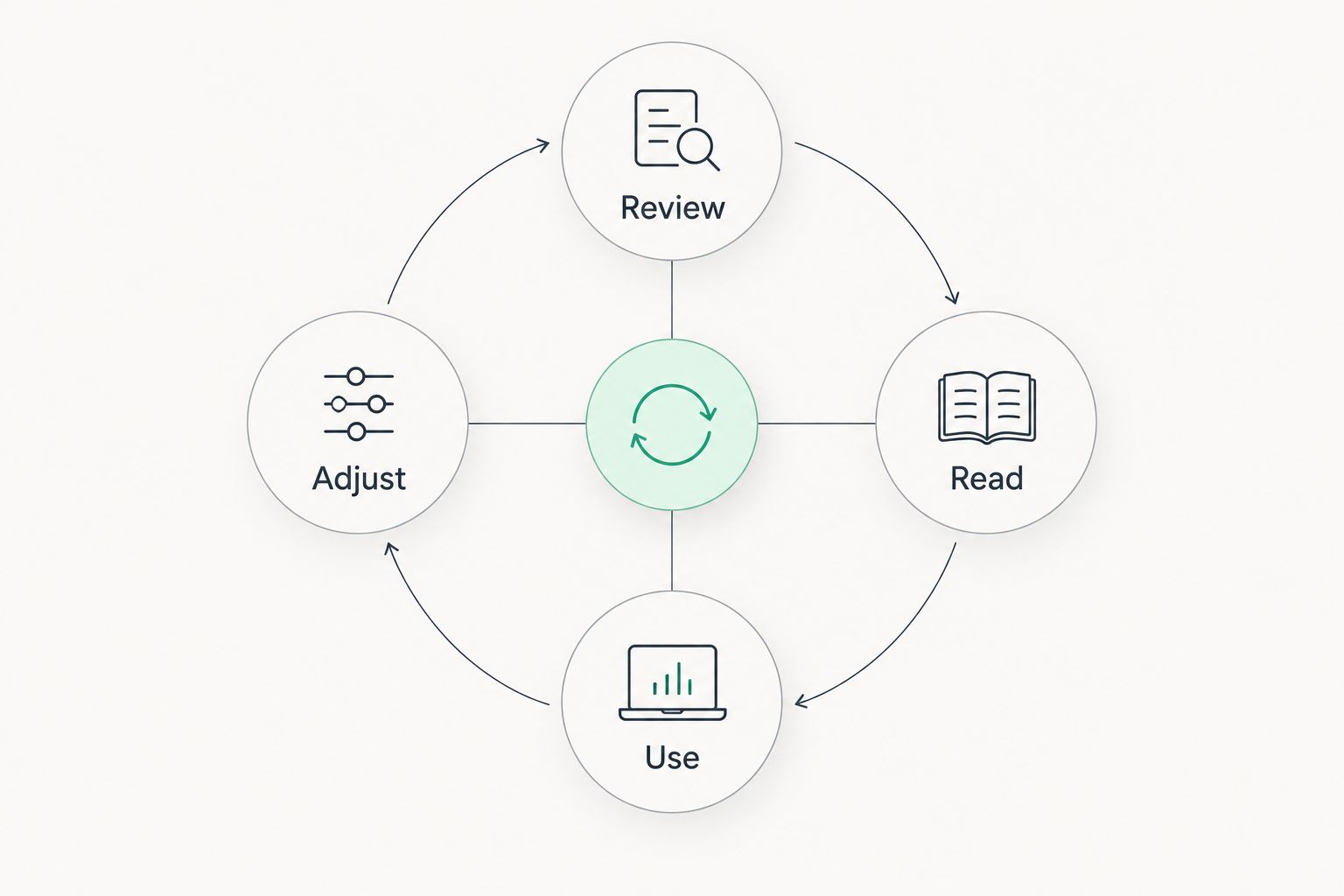
Keep the routine small enough to repeat. Adding vocabulary is easy; making time to revisit it is the commitment that should determine how much you add.
Which Japanese vocabulary app should you choose?
Choose Anki if you are undecided and want a review system that follows your own materials. Choose WaniKani instead when kanji recognition is the problem you want to tackle through a structured sequence.
Choose Renshuu for guided Japanese exercises, and use Takoboto when dictionary lookup is the missing part of an existing routine. Choose Lingua when Japanese vocabulary accompanies your English-learning goals.
For your 2026 study plan, assign each tool one job. A review app plus a dictionary has a clear division of labor; several overlapping review systems create more decisions without automatically adding useful practice.
FAQ
What's the best Japanese vocabulary app overall?
Anki is the best overall choice here for learners who want customizable vocabulary review. Its strength is letting your cards follow your textbook, reading or lessons; you must still select accurate material.
Is Anki better than WaniKani for Japanese vocabulary?
Anki is better for custom vocabulary collections, while WaniKani is better suited to a structured kanji-led sequence. Choose based on whether personal control or a planned path matters more.
Is Lingua suitable for learning Japanese vocabulary?
Lingua offers Japanese vocabulary courses alongside its primarily English-learning offering. It suits learners interested in both areas, but its English Buddy feature should not be assumed to provide Japanese conversation practice.
Which Japanese vocabulary app should a beginner choose?
A beginner who wants guided Japanese exercises should consider Renshuu; a beginner focused on a structured kanji sequence should consider WaniKani. Anki suits beginners who already have reliable learning material and want to review it.
Can a dictionary app replace a Japanese vocabulary course?
A dictionary app does not replace a structured vocabulary course or review routine. Takoboto supports lookup, but you still need repeated encounters and deliberate practice to learn the words you find.
Should I study Japanese vocabulary with kanji or kana?
Study a word's normal written form alongside its reading. Kanji recognition and reading knowledge serve different purposes, so check both rather than treating either as a complete answer.
How do I stop forgetting Japanese words after studying them?
Practice retrieving words before revealing answers, then revisit them through reading and listening. If reviews become difficult to finish, reduce new material and fix cards that are unclear or overloaded.
One last thing
A familiar kanji can make an unfamiliar word look easier than it is. Recognizing the characters does not establish the word's reading, meaning or natural usage.
Before marking a word learned, test those separately. Hide the reading, explain the meaning in context, then produce a short example without copying. That check tells you what to practice next more clearly than another completed word list.
Related guides
If you are also studying English, these guides address separate learning goals: