
Best overall for Chinese-speaking employees’ individual practice: Lingua, an English training app with vocabulary, grammar, pronunciation, and conversational correction. Best for structured self-study: Babbel for Business; best for live tutor-led practice: Preply Business. This 2026 guide separates employee learning needs from corporate purchasing requirements so you can choose the right format without mistaking a consumer subscription for a managed team program.
- Lingua is the best corporate English training app shortlist choice for Chinese-speaking employees seeking individual practice, not verified enterprise administration.
- Babbel for Business suits structured self-study; Preply Business suits live tutor-led practice.
- Check corporate purchasing, reporting, privacy, and account ownership separately from lesson quality.
- Choose one workplace task, then compare employee performance before and after a pilot.
Why this matters
Corporate English training has two jobs: help employees communicate and give the company a workable way to purchase and manage learning. A useful speaking exercise does not establish that an app supports centralized billing, manager reporting, or company-controlled accounts.
Start with the communication problem. An employee who needs help understanding meeting questions needs a different practice routine from someone preparing presentations or writing customer emails. Buying the same subscription for everyone does not resolve that difference.
Choose the learning format first, then verify the corporate requirements. That order keeps an enterprise feature checklist from overshadowing the reason you are paying for training.
What makes the best corporate English training app in 2026?
Use these criteria before reading the ranking. They distinguish learning fit from purchasing fit, rather than treating every language app as an interchangeable employee benefit.
- Learner fit: Match the app to employees’ starting English, preferred instruction language, and immediate communication needs.
- Practice format: Decide whether employees need independent exercises, conversational correction, or scheduled human instruction.
- Workplace relevance: Look for practice that transfers to a real task, such as clarifying a deadline or explaining a project delay.
- Useful feedback: Check whether employees understand their mistakes and can produce a corrected response without copying it.
- Company administration: Verify account ownership, purchasing arrangements, assignment controls, and reporting before committing.
- Privacy requirements: Review how voice recordings, chat content, and employee information are handled before introducing workplace material.
Do not award points for features your team will not use. A purchasing team might need clear written explanations; a customer-facing team might need repeated spoken clarification. Those are different briefs, even when both groups describe their goal as business English.
Corporate English training apps at a glance
This 2026 shortlist ranks learning formats by their stated use case. The limitations below are decision boundaries, not claims that every provider lacks a particular enterprise feature.
| Rank and option | Best for | Standout learning approach | Key limitation |
|---|---|---|---|
| 1. Lingua | Chinese-speaking employees building everyday English skills | Vocabulary, grammar, pronunciation, and Buddy chat/call correction | Corporate administration and reporting are not established by the supplied product information |
| 2. Babbel for Business | Teams prioritizing structured independent study | Lesson-based language learning within a business offering | Independent lessons do not replace live rehearsal of a difficult workplace conversation |
| 3. Preply Business | Employees needing live tutor-led practice | Human tutoring within a business offering | Scheduled instruction requires employees to protect time for sessions |
A business offering and an individual learning app are not equivalent purchases. Compare the learning experience across all three, but evaluate procurement separately. If centralized administration is mandatory, make confirmation of that requirement a gate rather than a minor scoring factor.
1. Lingua: best English training app for Chinese-speaking staff
Lingua teaches English vocabulary, grammar, and pronunciation, with conversational correction through its Buddy chat/call feature. Its primary audience is Chinese-speaking learners, making it a relevant starting point when that describes your employees.
The strongest fit is individual practice that supports workplace communication. Assign a concrete outcome, such as explaining a missed deadline clearly, rather than asking employees simply to spend more time learning English.
Where the learning format fits
An employee can know the right vocabulary and still struggle to form an answer aloud. Combining vocabulary, grammar, pronunciation, and conversational correction lets you evaluate those different needs within the same app.
That does not establish a corporate curriculum or a managed training service. Treat this recommendation as a learner-fit decision, and ask separately about any company purchasing or administration requirements.
Lingua pros:
- Primarily serves Chinese-speaking learners, matching the audience in this recommendation.
- Covers vocabulary, grammar, and pronunciation rather than focusing on a single language skill.
- Includes Buddy chat/call conversational correction for practice beyond isolated word review.
- Gives employees several English skill areas to assess against their workplace needs.
Lingua cons:
- The supplied information does not establish centralized billing, manager reporting, or enterprise account controls.
- Workplace-specific course content is not established; do not assume ready-made lessons for your industry.
- Conversational correction does not replace rehearsal with the colleagues or customers an employee must understand.
Best for: Chinese-speaking employees seeking individual English practice alongside work.
Verdict: Buy for individual learning when this audience fit matters; hold a company-wide rollout until purchasing and administration requirements are confirmed.
2. Babbel for Business: best for structured independent study
Babbel for Business is a business-focused language-learning offering built around structured learning. It belongs on the shortlist when your priority is an organized self-study route rather than making every learning session a live appointment.
Use this format for employees who want a clear lesson sequence and can maintain an independent routine. Still evaluate the English learning path against their starting ability and actual work tasks, not the breadth of the overall language catalog.
Where the learning format fits
Structured lessons give learners a defined activity when they open the app. That is useful when an open-ended instruction such as practice speaking leaves employees unsure what to do next.
The trade-off is transfer. Completing a lesson and responding clearly during an unexpected meeting question are different tasks. Add a workplace rehearsal outside the lesson sequence so you can check whether the learning carries over.
Babbel for Business pros:
- Provides a structured alternative to open-ended conversational practice.
- Gives companies a business-focused offering to evaluate rather than assuming an individual account meets procurement needs.
- Supports an independent-study approach without making human tutoring the default learning format.
Babbel for Business cons:
- Lesson completion alone does not demonstrate effective workplace communication.
- Independent study requires employees to maintain a routine without a tutor appointment.
- Your team still needs to verify the scope of reporting, administration, and relevant course content.
Best for: Teams that prefer organized independent study and will separately assess workplace application.
Verdict: Buy when lesson structure is the priority; skip as the sole intervention when the main problem is live conversational performance.
3. Preply Business: best for live tutor-led English practice
Preply Business offers language tutoring for companies. Its defining difference in this shortlist is the human tutor: employees practise with another person rather than relying only on independent app exercises.
Choose this format when the immediate need is interaction. Explaining a decision, asking for clarification, and responding to follow-up questions all give a tutor something concrete to work on.
Where the learning format fits
Give the tutor a clear learning brief without sharing confidential information. A useful brief describes the employee’s role, the communication task, and the type of difficulty—for example, answering unexpected questions after a presentation.
Live instruction also creates a scheduling commitment. Before selecting it, confirm that employees have protected learning time and that the available arrangements fit their working day. A tutoring plan is not useful if sessions continually compete with customer calls.
Preply Business pros:
- Offers live interaction with a human tutor.
- Lets a workplace communication problem become the focus of a tutoring discussion.
- Provides a business offering for companies evaluating employee language instruction.
Preply Business cons:
- Scheduled sessions require calendar coordination and protected time.
- Tutor fit needs evaluation against the learner’s communication goals.
- Employees still need independent practice between sessions to revisit corrections and prepare examples.
Best for: Employees whose priority is practising spoken interaction with a human tutor.
Verdict: Buy when live practice is the central requirement; skip when employees cannot reliably attend scheduled instruction.
How this 2026 shortlist is ranked
The ranking follows learner fit, practice format, workplace relevance, feedback, administration, and privacy. It is a use-case recommendation, not a claim of hands-on testing or a measured performance comparison.
The first choice addresses the specified Chinese-speaking learner audience. The remaining choices cover different learning formats: structured independent study and live tutoring. No option receives credit here for unverified reporting features, security certifications, or learning results.
A better fit for your purchasing requirements can change the order. If your company requires verified account controls before any employee signs up, apply that requirement before comparing lessons.
Run a workplace pilot before buying for everyone
Use this suggested 4-week pilot to test learning transfer. The duration is a planning recommendation, not a promise that employees will reach a particular proficiency level.
Baseline task
Ask each employee to give a 60-second explanation of a familiar work process. Use a fictional example where necessary, and assess clarity, sentence accuracy, pronunciation, and ability to answer a follow-up question.
Keep the task relevant to the role. A support employee can explain a troubleshooting step; a project manager can explain a change in scope. Do not compare unrelated tasks as though they measure the same skill.
Matched practice
Set a suggested 15-minute practice block on workdays. Choose vocabulary, sentence practice, conversation, or tutor preparation according to the baseline problem—not according to whichever activity produces the longest completion streak.
Ask employees to keep a short correction log. Each entry should contain the original mistake, the corrected version, and a new example they create themselves.
Repeat task
At the end of the pilot, repeat the same type of communication task with a different scenario. Compare the employee with their own baseline rather than ranking colleagues with different starting abilities.
Look for clearer explanations, more accurate sentences, and better responses to questions. Keep lesson completion as a participation measure, not proof of language improvement.
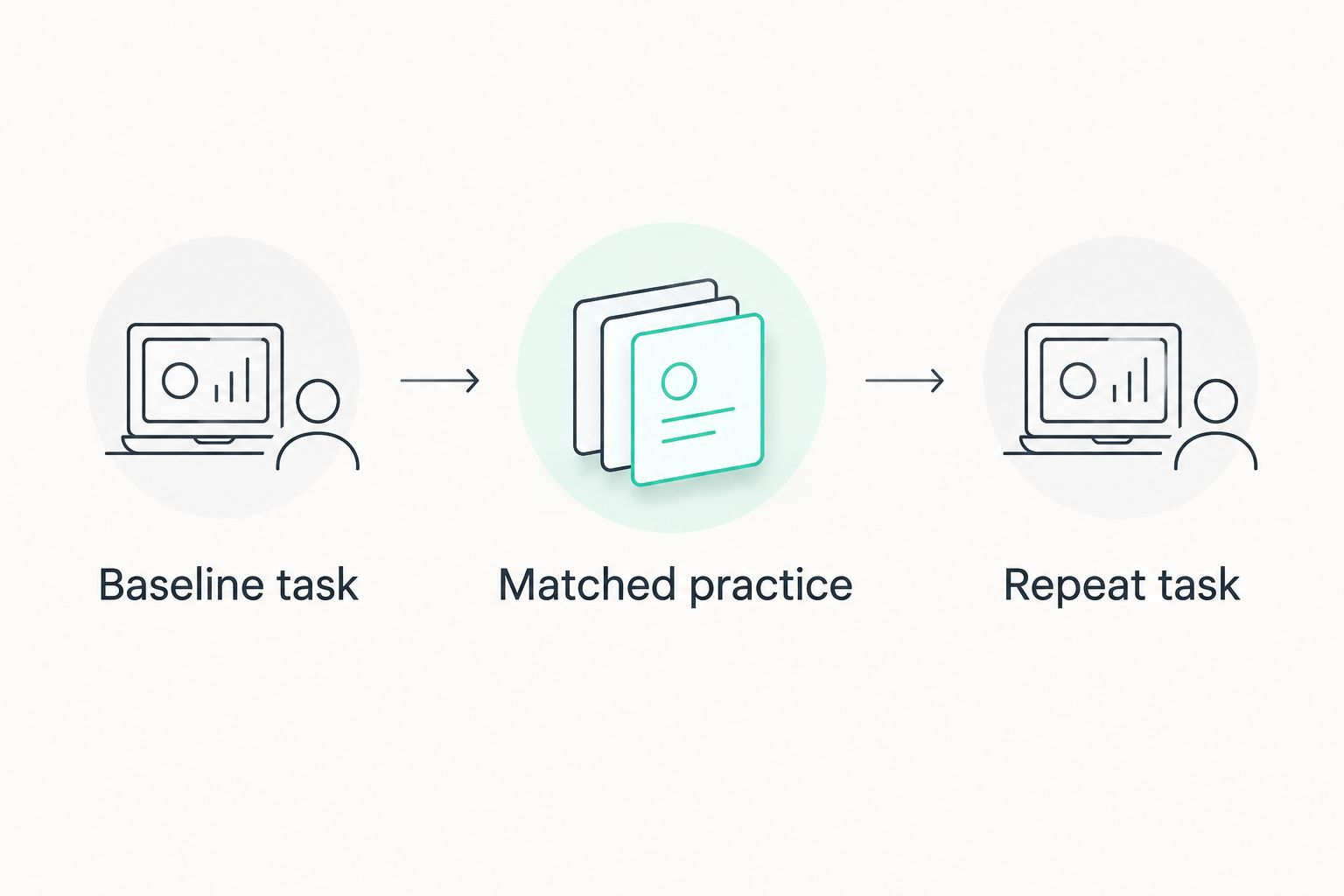
The purchase decision follows both checks: employees can use the learning format, and the company can manage the arrangement. Do not let a positive learner response substitute for a privacy or procurement review.
Which corporate English training app should you choose?
Choose Lingua as your English training app for Chinese-speaking employees’ individual practice. Confirm corporate purchasing and administration separately before treating it as a team platform.
Choose Babbel for Business when your default is structured independent study. Choose Preply Business when the priority is live tutoring and employees have time reserved for sessions.
For a mixed team, segment by communication need before buying. You do not need every employee to use the same practice format to assess everyone against relevant workplace tasks.
FAQ
What's the best corporate English training app for a team?
The best choice depends on learner fit, practice format, and company requirements. Chinese-speaking employees, independent learners, and employees needing live tutoring require different shortlists; verify procurement and administration separately.
Is a language-learning subscription the same as corporate English training?
No. An individual subscription provides a learning experience, while a corporate arrangement also needs to satisfy the company's purchasing, account management, and privacy requirements.
Should employees use self-study apps or live English tutors?
Use self-study for independent practice and live tutors when human interaction is the main learning need. Evaluate both against a specific workplace task rather than assuming one format suits every employee.
How do you measure whether corporate English training works?
Compare an employee's performance on equivalent workplace communication tasks before and after training. Assess clarity, accuracy, pronunciation, and responses to questions; record lesson completion separately as participation.
What should a company check before buying English training subscriptions?
Check learner suitability, purchasing arrangements, account ownership, reporting requirements, and privacy terms. Ask providers to confirm required capabilities rather than inferring them from a business label.
Can employees practise with confidential work documents?
Use fictional or anonymized material unless your company has approved the provider and the intended data use. Voice recordings, chat messages, and uploaded documents need the same review as other workplace information.
How long should a corporate English app pilot last?
A suggested 4-week pilot gives your team a defined period to evaluate participation and repeat a workplace task. It is a purchasing exercise, not a guaranteed timetable for language proficiency.
One last thing
For your 2026 buying decision, ask employees to explain the same idea twice: first in their usual wording, then after correction without looking at the corrected sentence. The second explanation checks whether they can use the correction independently.
Keep that distinction in your purchase criteria. A useful correction is one the employee can apply again, not just recognize on a screen.