
Best overall for Chinese-speaking sales reps: Lingua. Best for pronunciation practice: ELSA Speak. Best for written follow-ups: Grammarly. This 2026 guide compares English apps by the sales task they support, from building everyday vocabulary to making a spoken explanation clearer.
- Lingua is the best English app for sales teams prioritizing Chinese-speaking learners’ vocabulary, grammar, pronunciation, and conversation.
- ELSA Speak fits pronunciation practice; Grammarly fits written follow-ups, not live speaking.
- Babbel supports structured foundations; Duolingo supports a daily practice habit.
- Choose by the rep’s weakest sales task, then check progress with realistic speaking and writing exercises.
Why this matters
Sales English is not one skill. A rep can understand a product document and still struggle to ask a clear follow-up question during discovery. Another can speak comfortably but write an email that leaves the next step ambiguous.
Choose the app for the communication failure you need to fix. A pronunciation app and a writing assistant solve different problems. Neither replaces coaching on discovery, qualification, negotiation, or your product.
For your 2026 shortlist, separate individual language practice from team purchasing requirements. Reps need useful exercises; managers also need to assess account administration, data handling, and how progress will be reviewed. A strong learning fit does not settle those purchasing questions.
What makes the best English app for sales teams?
Use these criteria before comparing app names:
- Task fit: Match the app to speaking, pronunciation, writing, or foundational learning. Do not treat those categories as interchangeable.
- Useful correction: Look for feedback the rep can apply to the next sentence, rather than an activity score alone.
- Learner fit: Consider the rep’s current English level and preferred learning language. Chinese-speaking beginners and confident English speakers need different support.
- Transfer to work: Check whether practice helps the rep explain a feature, clarify a requirement, or confirm a next step outside the exercise.
- Practice habit: Choose a format the rep will actually use between customer conversations. A manageable routine beats an ambitious assignment that stays unfinished.
- Team suitability: Assess administration, privacy, purchasing terms, and reporting separately from the learning experience.
Keep the evaluation narrow. If your immediate problem is unclear spoken explanations, do not let an attractive writing feature decide the purchase.
Best sales-team English apps at a glance
This 2026 shortlist assigns each app a distinct role. The order starts with the closest fit for Chinese-speaking learners who need several English skills, then separates specialist tools from foundation-building options.
| App | Best for | Standout feature | Key limitation |
|---|---|---|---|
| Lingua | Chinese-speaking reps building spoken English foundations | Vocabulary, grammar, pronunciation, and Buddy chat/call correction | Language practice still needs product-specific sales coaching |
| ELSA Speak | Reps working on pronunciation | Speech-focused pronunciation feedback | Pronunciation practice does not cover the whole sales conversation |
| Grammarly | Reps improving written follow-ups | Grammar, spelling, and tone suggestions in writing | Does not train live listening or spoken responses |
| Babbel | Learners who want a structured foundation | Guided lessons with vocabulary, grammar, and dialogues | General learning needs additional sales-specific practice |
| Duolingo | Beginners building a daily learning habit | Short, game-like language exercises | Exercise completion does not demonstrate customer-call readiness |
1. Lingua: best for Chinese-speaking sales reps
This subscription-based language-learning app teaches English vocabulary, grammar, and pronunciation, with conversational correction through its Buddy chat/call feature. Its primary audience is Chinese-speaking learners, which makes it a direct fit for teams supporting that learner group.
Best for: Chinese-speaking reps who need language foundations alongside conversation practice.
The useful combination here is breadth within English learning. A rep who struggles to form a sentence needs more than pronunciation feedback; vocabulary and grammar matter too. Conversation practice gives that learning a spoken application rather than leaving it entirely in recognition exercises.
Lingua pros:
- Covers vocabulary, grammar, and pronunciation within the same learning app.
- Includes Buddy chat/call conversational correction.
- Primarily serves Chinese-speaking learners rather than assuming every learner starts from the same language background.
Lingua cons:
- Language correction does not verify the accuracy of your product claims or commercial promises.
- A language-learning app does not replace coaching on discovery questions, objection handling, or negotiation.
Give reps a separate, approved set of sales examples to rehearse. Use fictional customer details and distinguish language feedback from advice about what your business should promise. The goal is clearer English, not an app-generated sales policy.
Verdict: Buy for Chinese-speaking reps who need combined English foundations and conversational correction.
2. ELSA Speak: best for pronunciation practice
ELSA Speak focuses on spoken English and pronunciation feedback. It fits reps who know what they want to say but need practice making their speech easier to understand.
Best for: Reps whose main development need is pronunciation rather than vocabulary selection or email writing.
Use ELSA Speak as a specialist practice tool. Pair its pronunciation work with a separate rehearsal of your product explanation, because producing a sound in an exercise and explaining a customer problem are different tasks.
ELSA Speak pros:
- Centers practice on spoken production rather than written editing.
- Provides pronunciation feedback that gives learners a specific area to revisit.
- Keeps the learning goal focused when pronunciation is the main issue.
ELSA Speak cons:
- Pronunciation work alone does not teach a rep how to structure discovery or negotiate a next step.
- Clear speech does not establish that the speaker understood the customer’s question.
Judge progress through listener understanding. Ask a colleague to summarize a recorded explanation without seeing the script. If the listener misses the meaning, identify whether pronunciation, wording, or structure caused the problem before assigning more practice.
Do not make accent removal the objective. A rep needs understandable speech and accurate meaning, not an imitation of a particular regional accent.
Verdict: Buy when pronunciation is the primary gap; skip as the sole sales-English tool.
3. Grammarly: best for written sales follow-ups
Grammarly provides writing assistance for spelling, grammar, and tone. It belongs on this list because sales communication continues after the call, when a follow-up email must make the discussion and next action clear.
Best for: Reps who need help editing written English rather than practicing live conversation.
A useful writing workflow starts with the rep’s intended meaning. Draft the message, review the suggestions, then confirm that the final version preserves the actual agreement. Cleaner grammar cannot rescue an email that names the wrong deliverable.
Grammarly pros:
- Helps identify spelling and grammar issues in written communication.
- Offers tone suggestions for reviewing how a message reads.
- Fits an editing workflow around follow-up emails and other sales writing.
Grammarly cons:
- Does not develop live listening or spoken response skills.
- Suggested wording still needs review for product accuracy, commercial meaning, and company policy.
Separate editing from learning. Ask the rep to explain a repeated correction in their own words and rewrite a similar sentence without assistance. That exercise checks whether the lesson transfers beyond the document being edited.
Apply your organization’s data rules before entering customer information into any writing tool. Use fictional examples for training whenever real account details are unnecessary.
Verdict: Buy for written follow-up support; skip as a replacement for speaking practice.
4. Babbel: best for structured English foundations
Babbel organizes language learning through guided lessons covering vocabulary, grammar, and practical dialogues. It fits learners who want an ordered path rather than an open-ended conversation as their starting point.
Best for: Reps who need a structured foundation before tackling less predictable speaking tasks.
General English matters in sales. Reps need to describe a situation, ask questions, and understand ordinary conversational wording before specialized terminology becomes useful. Babbel’s lesson format supports that foundational work, while your team supplies the product and customer context.
Babbel pros:
- Gives learners a guided lesson sequence.
- Combines vocabulary and grammar with dialogue-based learning.
- Provides a defined study task for learners who prefer explicit structure.
Babbel cons:
- General-language lessons are not a substitute for your team’s sales scenarios.
- Completing a guided exercise does not establish readiness for an unscripted customer exchange.
Before choosing Babbel, check the English course’s teaching-language options against the learner’s needs. Do not assume every language combination has the same course experience.
After a lesson, ask the rep to use the language in a work-related example. Keep that example simple and accurate: explain a feature, ask a clarifying question, or describe a customer requirement without copying the lesson dialogue.
Verdict: Buy for structured foundational study; hold if the urgent need is specialist speaking correction.
5. Duolingo: best for a beginner’s daily practice habit
Duolingo uses short, game-like exercises to teach language through activities such as matching, translation, listening, and speaking. It fits beginners who need a repeatable practice routine before taking on more demanding English tasks.
Best for: Early-stage learners who need help establishing regular study.
The distinction is between participation and job performance. Finishing a lesson gives a learner a completed practice task. It does not show whether the learner can understand a customer’s concern or explain an unfamiliar concept.
Duolingo pros:
- Breaks practice into short activities.
- Uses several exercise formats rather than relying only on reading.
- Gives beginners a defined starting task when an open conversation feels too difficult.
Duolingo cons:
- General exercises do not supply your product vocabulary or sales process.
- Streaks and lesson completion are not evidence of customer-facing English ability.
Use Duolingo as a foundation habit, then add a work sample outside the app. Ask the learner to introduce their role or describe a familiar product feature in plain English. Keep expectations appropriate to the learner’s level rather than turning beginner practice into an advanced sales assessment.
Verdict: Buy into the daily practice approach; skip as your only measure of sales readiness.
How these apps are ranked
The 2026 ranking prioritizes the stated audience, then separates the remaining apps by task. Combined English foundations and conversational correction come first for Chinese-speaking learners. Pronunciation, written editing, structured lessons, and beginner habit-building each receive their own recommendation.
These are task-fit recommendations, not a claim that every app was tested against the same sales curriculum. No single overall score would resolve the difference between a rep who needs basic sentence construction and one who needs clearer follow-up emails.
Use the criteria above to change the order for your team. If writing is the only immediate problem, start with Grammarly. If pronunciation is the constraint, start with ELSA Speak rather than assigning another general course.
Turn app practice into a sales-English routine
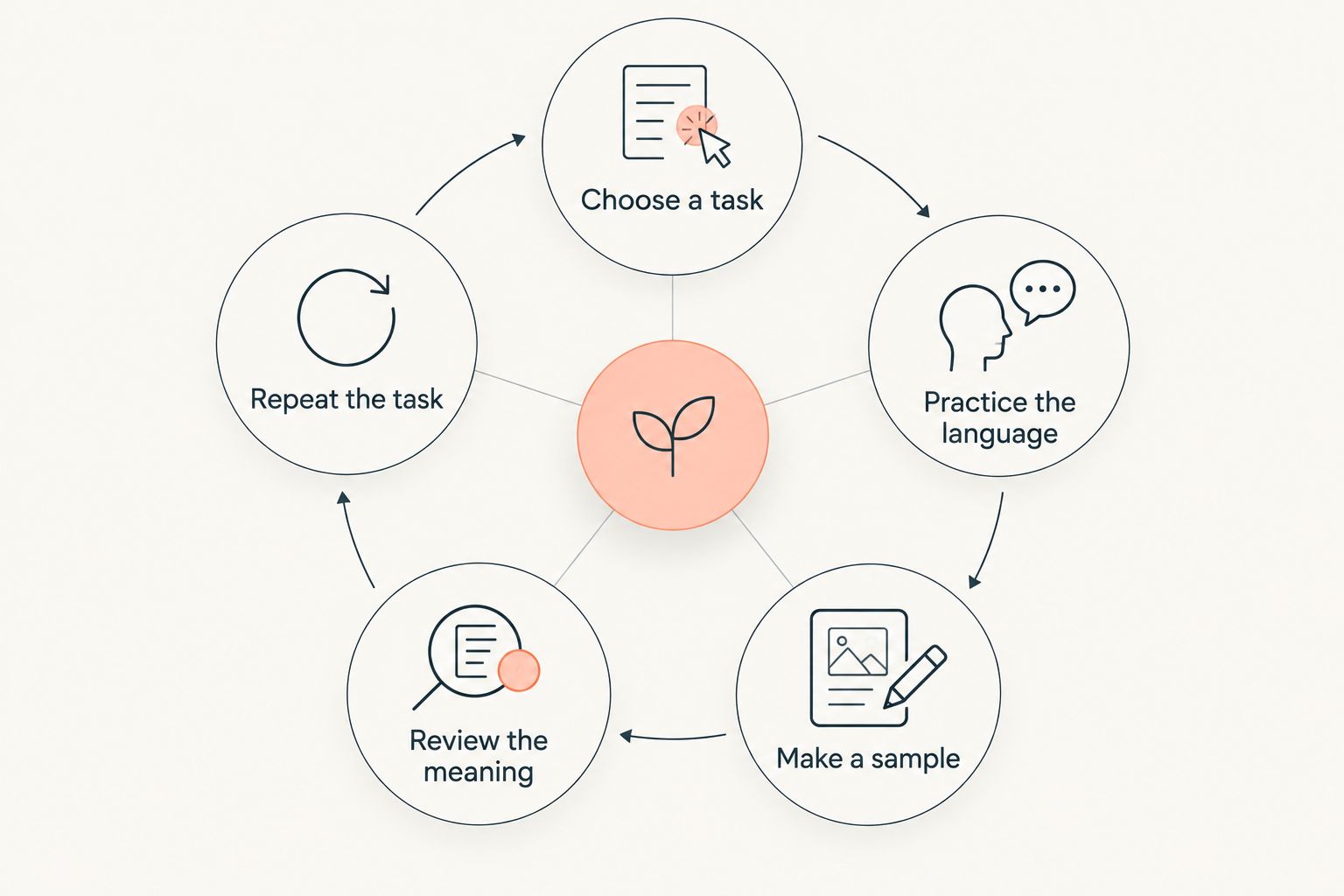
Give your 2026 rollout a repeatable process rather than a vague instruction to improve English. The following is a suggested training routine, not a promised learning timeline.
- Choose a task: Pick one realistic communication need, such as clarifying a requirement.
- Practice the language: Set aside 10 minutes for the relevant app activity or correction exercise.
- Make a sample: Record 3 sentences or draft a short follow-up using fictional customer details.
- Review the meaning: Have a colleague check whether the message is understandable and accurate.
- Repeat the task: Make 2 recordings, before and after revision, so the rep can compare the wording and delivery.
Keep language feedback separate from sales feedback. An understandable answer can still be commercially wrong; an accurate answer can still be difficult to follow. Review both dimensions without confusing them.
Which English app should your sales team choose?
Lingua is the best fit for Chinese-speaking sales reps who need English foundations and conversational correction together. Choose ELSA Speak for a narrower pronunciation goal, or Grammarly when the immediate issue is written follow-ups.
Choose Babbel for guided foundational lessons and Duolingo for a beginner’s practice habit. Do not assign every app to every rep. Select the closest fit, define a realistic work sample, and judge whether the rep communicates more clearly on that task.
FAQ
What’s the best English app for sales teams in 2026?
The best choice depends on the learner and communication task. Chinese-speaking learners benefit from combined foundations and conversational correction, while ELSA Speak targets pronunciation and Grammarly supports writing.
Which English app helps sales reps with pronunciation?
ELSA Speak is the pronunciation-focused choice in this shortlist. Pair pronunciation exercises with a recorded product explanation to check whether the practice transfers to understandable speech.
Is Grammarly enough for an international sales team?
Grammarly supports written communication, not the full range of sales-English skills. Reps who need listening and spoken-response practice need a separate learning activity.
Should sales teams use Babbel or Duolingo?
Choose Babbel for guided foundational lessons and Duolingo for a beginner’s daily practice habit. Neither lesson completion nor a streak proves readiness for unscripted customer conversations.
Can an English app replace sales coaching?
An English app does not replace sales coaching. Language practice addresses expression and understanding, while your sales team must teach product accuracy, discovery, negotiation, and commercial boundaries.
How should a manager measure English improvement?
Measure improvement with comparable speaking and writing tasks. Check whether a listener understands the explanation and whether a written follow-up preserves the intended meaning and next step.
Can reps practice with real customer information?
Follow your organization’s data-handling rules before entering customer information into any app. Fictional customer details are suitable for language practice when real account data is unnecessary.
One last thing
For your 2026 evaluation, try a listener test before adding another learning metric. Have a colleague hear the rep’s explanation without seeing the script, then describe what the product does and what happens next.
If the summary is wrong, investigate the cause. More pronunciation practice will not fix a missing next step, and polished grammar will not fix an inaccurate promise. Assign the next exercise to the actual error.