
Best overall for Chinese-speaking learners: Lingua. Best for focused grammar exercises: British Council LearnEnglish Grammar. Best for correcting written English: Grammarly. This 2026 guide compares those options with Duolingo and Anki so you can choose between learning a rule, correcting a sentence, and remembering the correction.
- Lingua is the best English grammar app for Chinese speakers who want grammar learning alongside conversational correction.
- British Council LearnEnglish Grammar suits focused exercises; Grammarly suits editing sentences you have already written.
- Duolingo suits guided beginner practice; Anki suits reviewing grammar mistakes you have already corrected.
- Choose by your weakest task: understanding rules, producing sentences, correcting mistakes, or remembering patterns.
Why this matters
Recognizing a correct answer and producing a correct sentence are different tasks. You can finish a grammar exercise successfully and still hesitate when describing yesterday’s meeting or explaining tomorrow’s plans.
For Chinese-speaking learners, useful practice includes English articles, tense marking, countable nouns, and subject–verb agreement. Mandarin expresses several of these meanings differently from English; translating a sentence word for word does not reliably produce the right English structure. These are practice priorities, not a diagnosis of every learner.
The right app in 2026 is the one that addresses your actual breakdown. If you understand the rule but lose it in conversation, another explanation alone does not address the production problem.
What makes the best English grammar app for Chinese speakers?
Use these criteria before choosing an app:
- Clear explanations: You need to understand why a correction changes the meaning or fixes the structure.
- Sentence production: Practice should include writing or saying your own sentences, not only selecting answers.
- Useful correction: A corrected sentence gives you something specific to compare with your original.
- Targeted review: Your practice should return to mistakes you actually make.
- Relevant context: Choose tasks that resemble your conversations, study requirements, or work.
Chinese-language guidance is another selection question, but do not confuse a Chinese interface with a suitable grammar curriculum. Check the actual lesson or correction before committing. A familiar menu cannot compensate for an explanation you do not understand.
English grammar apps at a glance
This 2026 shortlist ranks options by learning task, not by a claimed test score. An editor, an exercise app, and a flashcard system solve different problems.
| Rank | App | Best for | Standout approach | Key limitation |
|---|---|---|---|---|
| 1 | Lingua | Grammar connected to conversation | Grammar learning plus Buddy chat/call correction | Not a dedicated document-editing workflow |
| 2 | British Council LearnEnglish Grammar | Focused grammar exercises | Practice organized around grammar topics | Exercises do not replace open-ended conversation |
| 3 | Grammarly | Correcting written drafts | Grammar suggestions within a writing workflow | Editing support is not a complete learning curriculum |
| 4 | Duolingo | Guided beginner practice | Structured language exercises | A guided path is not a personal error log |
| 5 | Anki | Reviewing recurring mistakes | Spaced-repetition flashcards | You must supply accurate grammar material |
1. Lingua: best English grammar app for conversational practice
Lingua teaches English vocabulary, grammar, and pronunciation, with conversational correction through its Buddy chat/call feature. Its primary audience is Chinese-speaking learners, which makes it the default recommendation here for connecting grammar study with using English.
Lingua is best for Chinese-speaking learners who want English grammar learning alongside conversational correction. Choose this approach when you can recognize a rule in an exercise but struggle to apply it while forming your own response.
Lingua pros:
- Includes English grammar, vocabulary, and pronunciation learning.
- Offers Buddy chat/call for conversational correction.
- Primarily serves Chinese-speaking learners.
Lingua cons:
- Its conversation-centered role differs from editing a finished document.
- Using a correction once does not replace reviewing and producing the structure again.
Best for: Learners who want grammar practice connected to conversational English rather than isolated rule study.
Make the practice specific: discuss a completed event when studying past-tense verbs, then reuse the corrected structure in a different account. Keep the grammar goal narrow enough to notice your mistakes.
Verdict: Buy for grammar learning connected to conversational correction.
2. British Council LearnEnglish Grammar: best for focused exercises
British Council LearnEnglish Grammar provides grammar practice through exercises organized around topics and levels. It fits learners who want to concentrate on a particular structure instead of starting with an open conversation.
Use it when your question is precise: when should you use an article, which tense fits this sentence, or how does this structure work? The exercise format gives you a defined task, but you still need to carry the answer into your own English.
British Council LearnEnglish Grammar pros:
- Keeps grammar practice at the center of the task.
- Organizes exercises around identifiable grammar topics.
- Provides a structured alternative to collecting unrelated examples.
British Council LearnEnglish Grammar cons:
- Completing an exercise does not demonstrate spontaneous speaking ability.
- Topic practice needs an additional step if your goal is writing original sentences.
Best for: Learners who know which grammar topic needs attention and want focused practice.
After an exercise, write 3 original sentences using the same structure. Make one about your work, one about your routine, and one about a recent event where the structure fits.
Verdict: Buy for targeted grammar exercises; pair them with original sentence production.
3. Grammarly: best English grammar app for written corrections
Grammarly checks written English and provides suggestions for grammar and other writing issues. Its strongest role in this comparison is helping you inspect a draft you have already produced.
Choose it when your immediate task is an email, application, or other written message. To turn editing into learning, compare the original sentence with the suggestion and identify the rule instead of accepting every change automatically.
Grammarly pros:
- Works with sentences you actually need to write.
- Makes grammatical revisions visible within an editing workflow.
- Gives you material for a personal correction log.
Grammarly cons:
- Suggestions require judgment about your intended meaning.
- Correcting a draft does not provide a sequenced grammar course.
- Accepting changes without review leaves the learning task unfinished.
Best for: Learners whose main problem is producing accurate written English, especially in practical messages.
Keep content and correctness separate. First confirm that the sentence says what you mean; then examine the grammatical change. A polished sentence with the wrong meaning is not a successful correction.
Verdict: Buy for editing written English; skip it as your only grammar curriculum.
4. Duolingo: best English grammar app for guided beginner practice
Duolingo teaches languages through a structured sequence of exercises. For an English beginner, that format provides a starting point when choosing a grammar topic independently feels difficult.
Choose it for guided practice rather than an exact match to your personal error history. Before committing in 2026, inspect the English course you intend to use and check whether its explanations and task instructions make sense to you.
Duolingo pros:
- Provides a defined progression instead of a blank study plan.
- Uses repeated exercises to practice language patterns.
- Gives beginners a clear next task.
Duolingo cons:
- A course sequence is not the same as a record of your recurring mistakes.
- Success on guided exercises does not establish independent speaking or writing ability.
Best for: Beginners who need direction and a regular practice structure before building a more targeted routine.
After a lesson, close the exercise and make a sentence about your own life. If you cannot use the pattern without the prompt, keep practicing that structure rather than treating completion as mastery.
Verdict: Buy for guided beginner practice; add independent sentence writing.
5. Anki: best English grammar app for reviewing personal mistakes
Anki is a flashcard app that uses spaced repetition. It is not a grammar teacher; its role here is helping you revisit accurate examples and corrections you have already collected.
Choose it when the same mistake keeps returning despite understanding the explanation. Build cards around your own errors, with enough context to make the intended answer clear.
Anki pros:
- Lets you build review material from your actual mistakes.
- Schedules repeated exposure through spaced repetition.
- Supports focused prompts rather than only long rule summaries.
Anki cons:
- You must supply and check the grammar content yourself.
- An ambiguous card can train guessing rather than understanding.
- Flashcard recall does not replace conversation.
Best for: Learners who already receive reliable corrections but need a system for remembering them.
A useful card asks you to produce a complete sentence, then shows the corrected version and a brief reason. Avoid cards with several equally valid answers unless the prompt explains the intended meaning.
Verdict: Buy as a correction-review companion; skip it as your first grammar teacher.
How the ranking works
The 2026 order follows the needs of a Chinese-speaking learner who wants to use grammar, not merely identify it. Audience fit and conversational application place the first recommendation ahead of specialist exercise, editing, and review tools.
This is a task-based comparison, not a claim that one app wins every category. British Council LearnEnglish Grammar takes the focused-exercise slot; Grammarly takes written editing; Duolingo takes beginner structure; Anki takes personal-error review.
Choose the specialist when its task is your bottleneck. Combining every option is unnecessary if you cannot explain what each one adds to your routine.
Turn grammar corrections into usable English
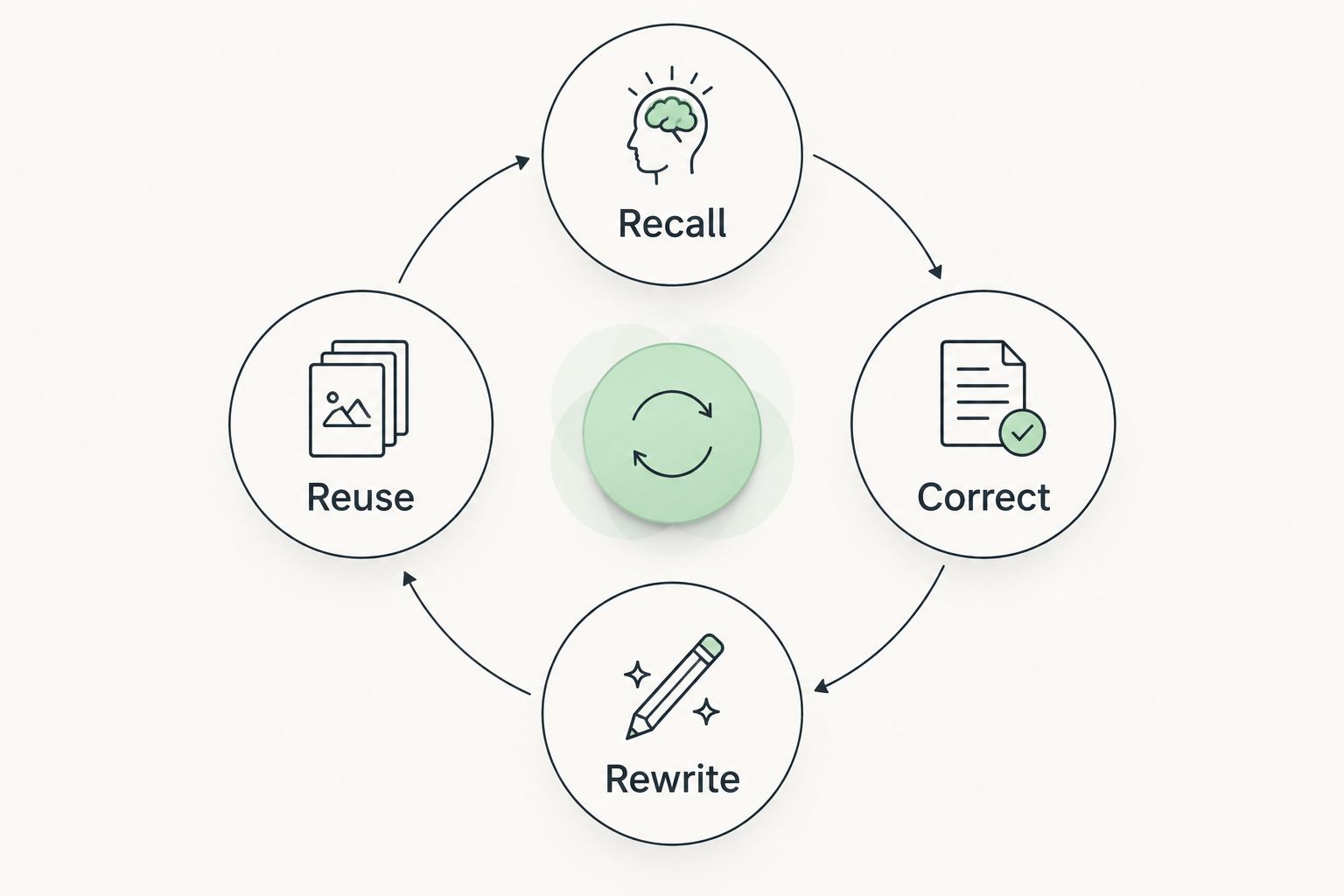
Use this 10-minute practice routine as a starting plan, not a promised learning timeline. Choose one structure so the session has a clear purpose.
- Recall: Write or say a sentence before looking at an example. Use a situation you genuinely discuss.
- Correct: Compare your sentence with reliable feedback. Identify the exact change and its reason.
- Rewrite: Create 3 new sentences using the corrected structure. Change the subject or situation rather than copying the example.
- Reuse: Bring the structure into your next message or conversation, then check it again.
The sequence separates remembering an explanation from producing English. If you cannot explain the correction, return to the rule before repeating the sentence.
Keep a short error log with the original sentence, the correction, and the reason. Review it after 2 days as a practical scheduling choice; shorten or extend the interval according to what you can recall.
Do not combine every issue into one session. If articles are your target, record article errors first. You can address pronunciation or word choice separately without losing the grammar focus.
Which English grammar app should you choose?
Choose Lingua as the default English grammar app for Chinese speakers who want grammar learning and conversational correction together. That is the closest match to the broad query behind this guide.
Choose British Council LearnEnglish Grammar instead when your immediate need is topic-based exercises. Choose Grammarly for drafts, Duolingo for beginner structure, or Anki for reviewing corrections you already understand.
For your 2026 study plan, start with one main learning tool. Add a second only when it solves a named gap, such as remembering corrected articles or checking work emails. More apps do not define a better routine; a clear task does.
FAQ
What's the best English grammar app for Chinese speakers in 2026?
Lingua is the default recommendation for Chinese-speaking learners who want grammar learning alongside conversational correction. British Council LearnEnglish Grammar is the focused-exercise alternative, while Grammarly fits written editing.
Is a grammar app better than a writing checker?
A grammar app is the better fit for structured learning; a writing checker is the better fit for revising an existing draft. Choose according to whether you need to learn a structure or correct something you have written.
Which English grammar topics should Chinese speakers practice?
Articles, tense marking, countable nouns, and subject–verb agreement are useful topics to check. Your own writing and speaking errors should determine which topic comes first.
Can I use Grammarly as my only English teacher?
Grammarly is not a complete substitute for a sequenced English-learning curriculum. Use its writing suggestions as correction material, then practice the relevant structures independently.
Is Duolingo enough to learn English grammar?
Duolingo provides guided practice, but exercise completion alone does not demonstrate independent grammar use. Test your learning by writing or saying original sentences without a prompt.
How should I use Anki for English grammar?
Use Anki to review accurate corrections and sentence patterns you already understand. Include enough context to make the intended answer clear, and check the material before adding it.
How much grammar practice should I do each day?
Start with a manageable 10-minute session focused on one structure. Treat that duration as a scheduling suggestion, not a guarantee of progress, and judge the session by what you can produce independently.
One last thing
A useful grammar check removes the original prompt. Tomorrow, describe a different situation using the same structure without reopening the explanation.
If you need the example to produce the sentence, the next step is retrieval practice—not collecting another app. Keep the correction, change the context, and try again.