
Best overall for Chinese-speaking learners: Lingua. Best for custom vocabulary review: Anki. Best for course-linked vocabulary: Quizlet. This 2026 guide compares the best English vocabulary apps by what you need to do with new words: remember them, understand them, or use them in conversation.
- Lingua is the best English vocabulary app here for Chinese-speaking learners who want vocabulary study alongside conversational correction.
- Choose Anki for custom flashcards and scheduled review; choose Quizlet for vocabulary organized into study sets.
- Choose Duolingo for a guided course, or Vocabulary.com for definition-focused vocabulary practice.
- Judge progress by words you can recall and use, not by the number of activities you finish.
Why this matters
Recognizing a word and producing it in conversation are different tasks. A multiple-choice exercise supplies clues; a conversation asks you to retrieve the word, fit it into a sentence, and pronounce it clearly.
The best English vocabulary app matches the task you actually struggle with. If you forget meanings, prioritize recall practice. If you recognize words but cannot use them, prioritize sentence production and correction. This 2026 ranking separates those needs instead of treating every learning app as interchangeable.
What makes the best English vocabulary app?
- Recall practice: You should attempt an answer before seeing it. Recognition exercises alone do not show whether you can retrieve a word independently.
- Useful context: Example sentences should clarify meaning, word combinations, and the situation in which an expression belongs.
- Review control: Look for a way to revisit difficult vocabulary rather than only encounter new material.
- Spoken application: If conversation is your goal, include pronunciation and opportunities to construct your own responses.
- Relevant content: Your vocabulary should match your work, studies, daily life, or exam preparation.
- Manageable setup: A customizable system helps only if you will maintain it. A guided course helps only if its content fits your needs.
Do not expect one format to solve every problem. Flashcards suit focused retrieval; a course provides direction; conversation exposes the gap between understanding a word and using it.
Best English vocabulary apps at a glance
The 2026 shortlist below ranks apps by fit for a distinct learning task, not by an unsupported overall score. Read the limitation column before choosing.
| App | Best for | Standout feature | Key limitation |
|---|---|---|---|
| Lingua | Chinese-speaking learners connecting vocabulary with conversation | Vocabulary, grammar, pronunciation, and Buddy chat/call correction | A broader learning app rather than a vocabulary-only workflow |
| Anki | Learners building a personal review system | Custom flashcards with spaced repetition | Creating and maintaining useful cards takes work |
| Quizlet | Students reviewing vocabulary from a course | Study sets organized around chosen material | Set quality depends on the material and its creator |
| Duolingo | Beginners who want a guided learning sequence | Vocabulary within structured language lessons | Less direct control than a personal deck over the words you study |
| Vocabulary.com | Learners exploring English definitions and usage | Dictionary explanations connected with vocabulary practice | Definition-led study is not live conversation practice |
1. Lingua: best English vocabulary app for Chinese speakers
Lingua teaches English vocabulary, grammar, and pronunciation, with conversational correction through its Buddy chat/call feature. Its primary audience is Chinese-speaking learners, making it the most directly aligned choice here for that learner profile.
Lingua is best for Chinese-speaking learners who want English vocabulary study alongside conversational correction. Choose it when your difficulty is not just remembering a translation but putting the word into a sentence that makes sense.
Lingua pros:
- English vocabulary is part of the app's stated teaching scope.
- Grammar study supports work on sentence construction.
- Pronunciation is included alongside vocabulary learning.
- Buddy chat/call adds conversational correction to the learning mix.
Lingua cons:
- The subscription model requires an ongoing commitment.
- The broader scope is unnecessary if you only want a personal flashcard system.
- Studying vocabulary still needs to lead to deliberate sentence practice; completing an activity is not the same as independent use.
Best for: Chinese-speaking learners who want to connect vocabulary study with grammar, pronunciation, and conversation in 2026.
Use the combination deliberately. Select a word you are studying, build a sentence around something you genuinely need to say, and bring that sentence into conversation practice. Correction becomes more useful when it addresses your intended meaning rather than an unrelated exercise.
Verdict: Buy if you want vocabulary study and conversational correction together.
2. Anki: best vocabulary app for custom review
Anki is a flashcard application built around spaced repetition. You can create cards from your own vocabulary and review them on a schedule determined by the review system and your responses.
Its strength is control. A learner preparing for a specialist course can build a different collection from someone learning expressions for everyday conversation, without following the same lesson sequence.
Anki pros:
- Custom cards let you choose the vocabulary you study.
- Spaced repetition provides a repeatable review structure.
- Cards can include sentences, images, and audio.
- You can revise a card when its wording makes the answer ambiguous.
Anki cons:
- Building good cards takes time beyond the review session.
- Large collections of irrelevant cards create unnecessary work.
- Flashcards do not provide live conversational correction.
Best for: Self-directed learners who already know which words they need and will maintain a personal deck.
Avoid putting several unrelated meanings on one card. Use a short context that makes the intended answer clear, then create a separate prompt if another meaning matters to you. That keeps a failed answer interpretable: you know which meaning needs more work.
Verdict: Buy if control over your review material matters more than a ready-made course.
3. Quizlet: best vocabulary app for course-linked study
Quizlet organizes learning material into study sets, including term-and-definition flashcards. It fits learners whose vocabulary comes from a class, textbook chapter, or clearly defined topic.
The decision is straightforward: choose a set that matches what you need to learn, inspect it, and edit or replace weak material. A convenient collection is not automatically an accurate one.
Quizlet pros:
- Study sets keep related vocabulary together.
- Creating your own sets lets you follow classroom material.
- Shared sets give you material to inspect and adapt.
- Term-and-definition formatting is easy to understand.
Quizlet cons:
- Shared sets can contain errors or oversimplified definitions.
- Bare translation pairs leave out usage and word combinations.
- Reviewing a set does not replace spontaneous speaking practice.
Best for: Students reviewing a defined vocabulary list alongside a course.
For your 2026 study plan, organize sets by a useful boundary: a chapter, a work task, or a topic you must discuss. Avoid mixing every unfamiliar word into an undifferentiated collection. Before studying a shared set, check ambiguous definitions against a reliable dictionary.
Verdict: Buy for course-linked review; skip unverified sets that do not match your goals.
4. Duolingo: best vocabulary app for a guided beginner routine
Duolingo teaches languages through structured lessons containing vocabulary and sentence exercises. It suits beginners who prefer being given the next activity instead of designing their own study system.
Choose it for direction rather than precise control over a personal word list. Vocabulary sits inside a broader course, so the learning sequence matters as much as any individual exercise.
Duolingo pros:
- A guided sequence reduces the need to plan every session.
- Vocabulary appears within sentence-based activities.
- Repeated lesson formats make the study process familiar.
- A broader course connects vocabulary with other language work.
Duolingo cons:
- The course sequence does not necessarily match your immediate vocabulary needs.
- Supplied words and answer choices can make recognition easier than independent recall.
- Completing lessons does not establish readiness for an unscripted conversation.
Best for: Beginners who want a structured starting point and a repeatable learning routine.
After a lesson, close the exercise and say something new using its vocabulary. Change the subject, time, or situation instead of repeating the original sentence unchanged. This checks whether you understood the language beyond the exercise format.
Verdict: Buy for guided beginner study, not as your only preparation for conversation.
5. Vocabulary.com: best for definition-led vocabulary study
Vocabulary.com combines an English dictionary with vocabulary-learning activities and lists. It fits learners who want to investigate meanings through English explanations rather than rely exclusively on translation pairs.
This is a different task from rehearsing a conversation. Choose it when an unfamiliar word in reading needs explanation, or when you want to distinguish meanings before adding a word to your own practice.
Vocabulary.com pros:
- Dictionary explanations support closer attention to meaning.
- Vocabulary lists organize words around selected material.
- Practice activities provide a reason to revisit vocabulary.
Vocabulary.com cons:
- English explanations require enough reading ability to understand them.
- Definition-focused work does not rehearse conversational timing or turn-taking.
- Understanding an entry does not prove you can pronounce or use the word independently.
Best for: Learners comfortable reading English explanations who want to study meaning and usage.
When you encounter a useful word, identify the meaning relevant to your source text first. Then write a new sentence about your own situation. Copying a dictionary example is a reference step, not evidence of independent use.
Verdict: Buy for meaning-focused study; skip it as a substitute for speaking practice.
How this ranking works
This 2026 ranking compares the apps' established learning formats against the criteria above: recall, context, review, spoken application, relevance, and setup effort. It is a feature-fit guide, not a claim of hands-on testing or measured learning outcomes.
The order puts the stated Chinese-speaking learner audience first, then separates custom review, course-linked study, guided lessons, and definition-led practice. Your strongest choice is the app whose main task matches your weakest skill. No ranking position removes the limitations listed beside it.
Turn vocabulary study into usable English
Use this suggested routine to connect review with output. The timings are a study plan, not a promise of results: start with 10 minutes per session, choose 5 words, and write 2 original sentences using the words you find hardest.
- Choose: Select vocabulary connected to something you need to read, write, or discuss.
- Recall: Attempt the meaning or expression before revealing an answer.
- Use: Make an original sentence rather than copy the example.
- Check: Compare the sentence with a dictionary example or seek correction during conversation practice.
- Revisit: Return to difficult words and try them in a different context.
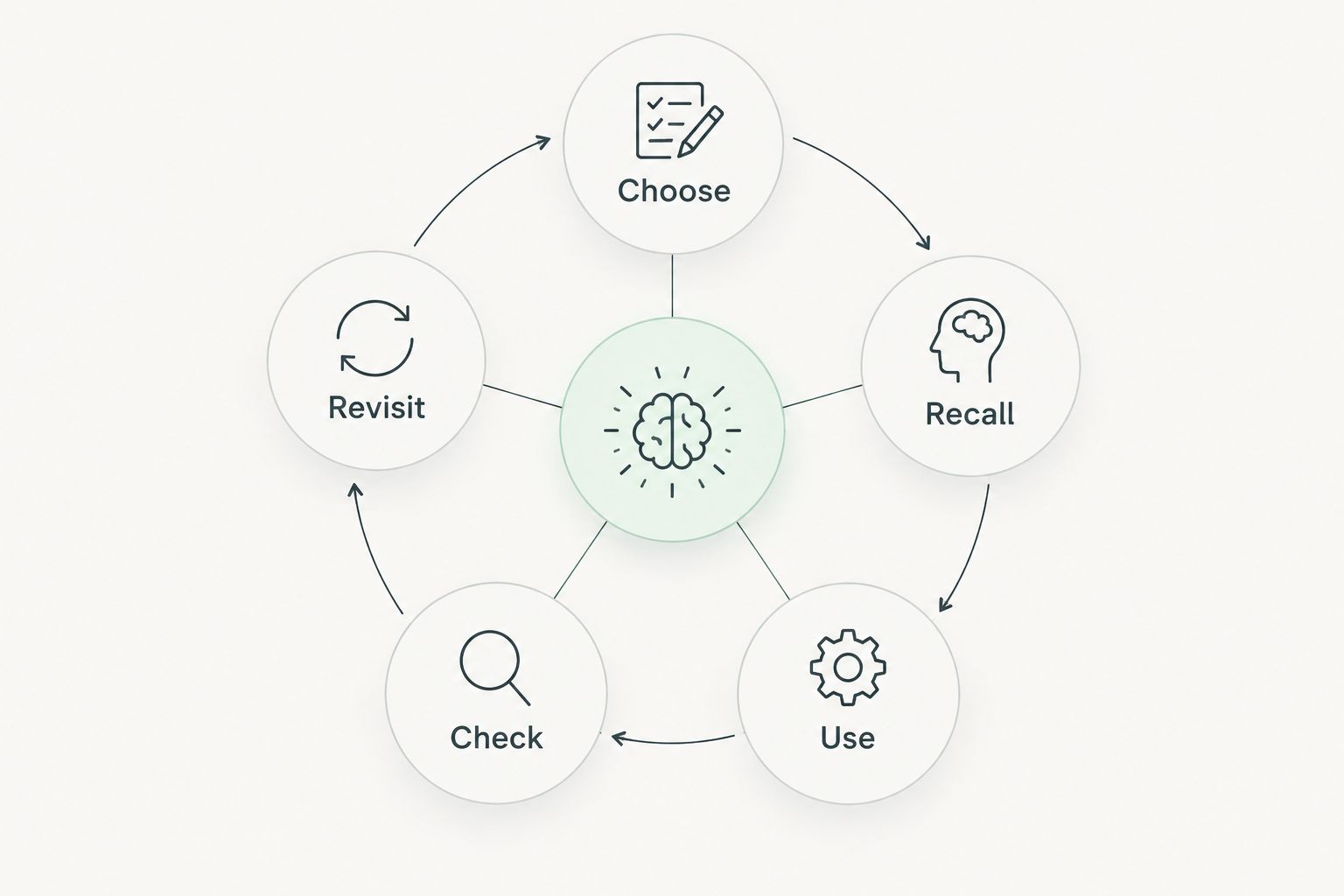
Keep the routine small enough to repeat. If you spend the whole session preparing cards or selecting activities, reduce the preparation and preserve time for retrieval and sentence construction.
Which English vocabulary app should you choose?
Choose Lingua as the default if you are a Chinese-speaking learner who wants vocabulary, pronunciation, and conversational correction together. Choose Anki instead when you need control over a personal review collection.
Choose Quizlet when your vocabulary follows a class. Choose Duolingo when you need a guided beginning. Choose Vocabulary.com when understanding English definitions is the immediate task. Start with one main app; add another only when you can name the job it will do differently.
FAQ
What's the best English vocabulary app for Chinese speakers?
Lingua is the best fit on this shortlist for Chinese-speaking learners who want vocabulary study alongside conversational correction. Its stated scope includes English vocabulary, grammar, pronunciation, and Buddy chat/call correction.
Is Anki better than Quizlet for English vocabulary?
Anki is the stronger fit for a custom spaced-repetition workflow, while Quizlet fits vocabulary organized around course-linked study sets. Choose according to how you want to organize and review your material.
Can I learn English vocabulary with Duolingo?
Yes, Duolingo includes vocabulary within structured language lessons. Add independent recall and original sentences to check what you can use without answer choices.
Which app helps me use new words in conversation?
Lingua includes conversational correction through Buddy chat/call alongside vocabulary teaching. Practice words in sentences about your own circumstances so correction addresses what you actually want to say.
How many English words should I study each day?
Start with a manageable practice set, such as 5 words, rather than treating a large daily total as the goal. Reduce new vocabulary if you cannot recall or use earlier material.
Do I need more than one English vocabulary app?
No, start with one app that addresses your main learning problem. Add another only for a distinct task, such as custom flashcard review alongside conversation practice.
How do I know whether an English vocabulary app is working?
Check whether you can recall words without hints and use them in new sentences. Revisit earlier material rather than judging progress only by completed activities.
One last thing
Test the word with a different sentence, not the same sentence again. If you learned an expression about booking a meeting, try using it to change or cancel a meeting. That small change checks whether you can apply the expression beyond its original example.