
LanguaTalk gives you access to language tutors for lessons built around human conversation. That tutor-led model stops being enough when your main need is independent practice between lessons rather than another appointment. The best LanguaTalk alternative in 2026 is Lingua if you’re a Chinese-speaking learner working on English vocabulary, grammar, pronunciation and conversational correction; italki if you want another tutor marketplace.
- Among LanguaTalk alternatives, Lingua fits Chinese-speaking learners seeking English practice with vocabulary, grammar, pronunciation and conversational correction.
- Choose italki when you want human tutoring rather than a different learning format.
- Choose Tandem when reciprocal language exchange matters more than structured instruction.
- Keep LanguaTalk when your current tutor already provides the feedback and accountability you need.
Why this matters
A language tutor, a learning app and an exchange partner solve different problems. Comparing them as interchangeable products sends you toward the wrong replacement, even when each option does its own job well.
For your 2026 shortlist, start with the task you cannot complete comfortably today. Do you need someone to explain your mistakes, a place to practise between lessons, or more experience talking to unfamiliar people? Your answer matters more than the length of a feature list.
This comparison separates those needs. It also explains when replacing LanguaTalk would remove something useful instead of fixing the actual gap in your learning routine.
LanguaTalk alternatives at a glance
Use this table to choose a learning format before choosing a provider. The strongest alternative is the one that changes the part of your routine that is not working.
| Option | Best for | Standout feature or format | Difference from LanguaTalk |
|---|---|---|---|
| LanguaTalk | Learners seeking tutor-led lessons | Human tutoring | The benchmark for keeping a tutor-led routine |
| Lingua | Chinese-speaking learners practising English independently | Vocabulary, grammar, pronunciation and Buddy chat/call correction | An app-based practice option rather than another tutor marketplace |
| italki | Learners who still want a human tutor | Tutor marketplace | A different place to find a tutor, not a different learning format |
| Tandem | Learners seeking reciprocal conversation | Language exchange between learners | Peer exchange rather than a tutor-led lesson |
Do not switch from a tutor to an app expecting the same experience. Switch because the new format addresses a specific need, or use the formats together when their roles are distinct.
1. Lingua: best for Chinese-speaking English learners
Lingua is a subscription-based language-learning app focused primarily on Chinese-speaking learners. Its English offering covers vocabulary, grammar, pronunciation and conversational correction through the Buddy chat/call feature. That combination fits a learner who wants to work on language components as well as use them in conversation.
The distinction from LanguaTalk is the learning format. Instead of choosing another tutor marketplace, you are choosing an app for English practice. The app also offers Chinese and Japanese vocabulary courses, but those should not be confused with its broader English focus.
Where it shines
- English practice across connected skills: vocabulary, grammar, pronunciation and conversational correction sit within the stated offering.
- A defined learner focus: Chinese-speaking English learners are the primary audience, rather than an incidental use case.
- Conversation alongside language study: Buddy provides a chat/call feature for conversational correction.
- Vocabulary study beyond English: Chinese and Japanese vocabulary courses serve a narrower, clearly defined purpose.
Where it falls short
- Its strongest fit is specific. An English-focused recommendation does not establish the same fit for every language learner.
- Vocabulary courses are not complete language courses. The Chinese and Japanese offerings should be evaluated as vocabulary study, not substitutes for every aspect of learning those languages.
- An app is a different commitment from a tutor relationship. If your main reason for studying is an appointment with a particular teacher, changing formats does not preserve that routine.
Head-to-head with LanguaTalk
| Dimension | App-based option | LanguaTalk |
|---|---|---|
| Primary format | Language-learning app | Tutor-led lessons |
| Clearest fit here | Chinese-speaking English learners | Learners seeking human tutoring |
| Stated practice scope | English vocabulary, grammar, pronunciation and conversational correction | Lessons with a tutor |
| Decision to make | Do you want app-based practice? | Do you want to keep tutor-led learning? |
Best for: Chinese-speaking learners who want English practice that includes both language study and conversational correction.
Verdict: Buy Lingua for app-based English practice, not as a promise to reproduce a human tutor relationship.
2. italki: best for finding a different human tutor
italki is a language-tutor marketplace. Choose it when the tutor-led format still suits you, but you want another place to find a teacher. This is a provider change rather than a change in how you learn.
Your decision should centre on the individual tutor. A marketplace name cannot establish whether a particular teacher explains grammar clearly, corrects you at the right moments or gives you useful work between lessons.
Where it shines
- It preserves human instruction. You can continue learning through lessons with a tutor rather than rebuilding your routine around an app.
- The teacher remains the central choice. You can assess a tutor against your own learning goals.
- It suits a focused search. A clear brief gives you something concrete to discuss with a prospective teacher.
Where it falls short
- It does not change the underlying format. If arranging and attending lessons is your main obstacle, another tutor marketplace does not remove that task.
- Fit still requires evaluation. Choosing a platform does not choose the right teacher for you.
- Between-lesson practice remains a separate decision. Ask how a prospective tutor handles review rather than assuming every lesson arrangement includes it.
For a useful comparison, give a prospective tutor the same learning brief you use with your current teacher. Explain the situation you struggle with, show an example of your English and ask how the tutor would approach it. That gives you a decision based on teaching fit rather than profile wording alone.
Best for: learners who want a human teacher but need a different tutor match.
Verdict: Buy into italki’s tutor-led format only if human instruction remains your priority; skip it as a solution to avoiding scheduled lessons.
3. Tandem: best for reciprocal language exchange
Tandem connects language learners for language exchange. Its central difference from tutoring is reciprocity: you practise a language while helping someone else practise yours. That makes it a different kind of conversation relationship.
Choose it when meeting conversation partners is the goal. Do not treat an exchange partner as a teacher who owes you a lesson plan or detailed correction.
Where it shines
- Conversation is reciprocal. Both participants bring a language-learning goal to the exchange.
- You practise communicating with another learner. Explaining, clarifying and asking follow-up questions become part of the activity.
- It has a distinct supporting role. Exchange can sit alongside structured study without needing to replace it.
Where it falls short
- Your partner has learning needs too. The exchange is not devoted entirely to your English.
- Correction requires agreement. Discuss whether you want interruptions, written corrections or a summary afterward.
- Conversation is not a curriculum. If you need an ordered grammar sequence, an exchange alone does not define one.
Best for: learners who want reciprocal conversation and are willing to support another person’s learning.
Verdict: Buy into Tandem’s exchange model for peer conversation; skip it as your sole source of structured instruction.
Why people switch from LanguaTalk
The useful reasons to consider switching in 2026 concern learning format and fit. A list of alternatives is not evidence that your current service is failing, and a different provider is not automatically an improvement.
You need practice between lessons
If you understand a correction during a lesson but cannot use it afterward, your next decision concerns practice. Adding another tutor appointment and creating a repeatable review routine are different responses to that problem.
Identify what you need to rehearse: vocabulary retrieval, sentence construction, pronunciation or conversation. Then choose an option whose stated purpose covers that task. Keep the tutor if the explanation is useful and the gap is what happens afterward.
You want a different teacher, not a different format
If lessons suit you but the teaching relationship does not, another tutor marketplace is a relevant alternative. Write down the mismatch before searching: correction style, lesson focus or the way explanations are delivered.
Ask prospective tutors about that exact issue. Otherwise, you risk changing platforms while repeating the same selection process that produced the original mismatch.
You want peer conversation rather than instruction
Language exchange fits a different goal: talking with someone who is also there to learn. Choose it when reciprocal conversation is what you want, not because you assume every conversation partner will teach.
Agree on how to share the conversation and handle corrections. A clear arrangement respects both learners and makes the exchange easier to evaluate.
How to choose without restarting your learning routine
Use the same small task to compare options. This is a practical selection exercise, not a claim that a short session proves long-term learning results.
- Define the task: choose one situation, such as introducing your work or describing a recent trip.
- Produce a sample: speak for 2 minutes or write 3 sentences without copying a model answer.
- Review the correction: identify what changed and whether you understand why.
- Repeat the task: produce a new version using the correction rather than memorising the original.
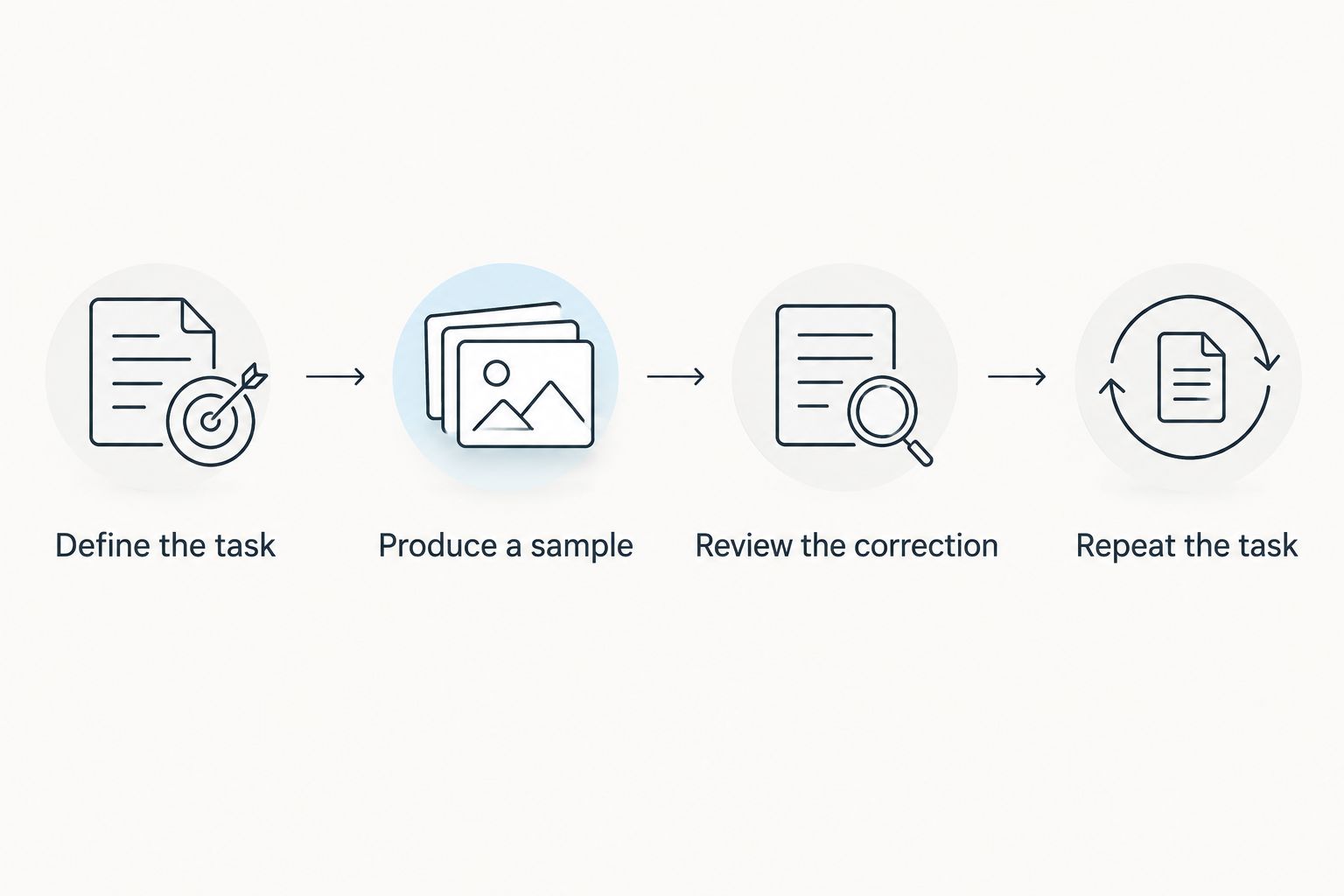
Give each option the same task in your 2026 comparison. A 10-minute review period keeps the exercise bounded without turning the duration into a promised learning outcome.
Look for feedback you can act on. A tutor explanation, an app correction and a partner’s suggestion are only useful to your selection process if you can understand the change and attempt it again. Record the result in plain language: what you corrected, what still confused you and what you would need next.
When staying with LanguaTalk is the right call
Stay with LanguaTalk if your current tutor relationship is doing the job you need. A teacher who understands your goals and gives explanations you can use is not made irrelevant by a different app or marketplace.
Separate dissatisfaction with your progress from dissatisfaction with your provider. If you are not reviewing corrections between lessons, switching tutor platforms does not itself create that habit. Change the routine first when the routine is the problem.
For 2026, keeping a useful tutor and assigning independent practice a separate role is a valid choice. You do not need one product to perform every learning task.
FAQ
What’s the best LanguaTalk alternative in 2026?
Lingua is the strongest fit in this comparison for Chinese-speaking learners seeking app-based English vocabulary, grammar, pronunciation and conversational correction. Choose italki for another tutor marketplace or Tandem for reciprocal language exchange.
Is italki better than LanguaTalk?
italki is a relevant alternative when you want a different human tutor, not a different learning format. Compare individual teachers against the same learning goal rather than treating the marketplace name as proof of teaching fit.
Can an English-learning app replace my tutor?
An app can replace the practice role you assign to it, but that is not the same as reproducing a tutor relationship. Decide whether you need independent exercises, conversational correction or a teacher’s explanation before replacing lessons.
Is Tandem a substitute for structured English lessons?
Tandem is a language-exchange option rather than a substitute for a defined course sequence. Use it for reciprocal conversation and agree with your partner on how to share practice and handle corrections.
What should Chinese-speaking learners compare first?
Chinese-speaking learners should first compare the English tasks each option supports. Check vocabulary, grammar, pronunciation and conversational correction separately instead of assuming that a general language-learning label covers every need.
Should I cancel LanguaTalk before trying an alternative?
Keep a useful tutor relationship while you assess whether an alternative addresses a separate need. Compare the options using the same speaking or writing task, then decide which role each one earns in your routine.
One last thing
Save an uncorrected sample of your English before changing your routine. Return to the same task after using the new approach and compare what you can produce without help. For your 2026 decision, that is a more relevant question than which service supplied the longest correction.