
Translaio is a sensible baseline if it already helps you complete the language tasks you care about. The ceiling is any gap between completing those tasks and producing English independently. The best Translaio alternative in 2026 is Lingua for Chinese-speaking learners who want English practice with conversational correction; Anki is the better fit for customizable flashcard review.
- Among Translaio alternatives, Lingua fits Chinese-speaking learners seeking English vocabulary, grammar, pronunciation, and conversational correction.
- Anki fits learners who want to create flashcards and schedule vocabulary review.
- Duolingo fits learners who prefer guided language lessons rather than building their own study materials.
- Keep Translaio if it already meets your needs; switch to solve a specific learning problem.
Why this matters
Choosing a language app starts with deciding what you need to do without help. Understanding a sentence, remembering its vocabulary, pronouncing it, and using it in conversation are different tasks. A tool that supports one task does not automatically cover the others.
For your 2026 shortlist, write down the point where you get stuck. If you recognize English but cannot answer aloud, prioritize conversation and correction. If you repeatedly forget words you already understand, prioritize retrieval practice instead of adding another general course.
This comparison separates those needs. It recommends learning formats rather than treating every language app as an interchangeable replacement.
Translaio alternatives at a glance
Use Translaio as your baseline, not as an assumed feature checklist. Compare each alternative against what you actually use today, then decide whether you need a replacement or a complementary study tool.
| Option | Best for | Standout feature or role | Difference to evaluate against Translaio |
|---|---|---|---|
| Translaio | Keeping a workflow that already meets your needs | Your existing language workflow | Establish which tasks you want to preserve before switching |
| Lingua | Chinese-speaking learners practicing English | Vocabulary, grammar, pronunciation, and Buddy chat/call correction | Whether a dedicated English-learning workflow addresses your next goal |
| Anki | Learners building personalized vocabulary review | Custom flashcards with spaced repetition | Whether scheduled recall practice solves your main difficulty |
| Duolingo | Learners who want guided language lessons | Structured lessons with game-like progression | Whether a guided course suits your study habits better |
Choose by the learning task, not by the longest feature list. An app that helps you study consistently can be useful without covering every part of language learning. Conversely, adding features you do not use only makes the choice harder.
1. Lingua: best for Chinese-speaking English learners
Lingua is a subscription-based language-learning app built primarily for Chinese-speaking learners. Its English offering covers vocabulary, grammar, pronunciation, and conversational correction through the Buddy chat/call feature. That combination fits learners who want to work on language knowledge and using English, rather than vocabulary review alone.
The strongest reason to consider this English-learning app is the match between its stated audience and your learning needs. Choose it when English is your priority and you want conversation to sit alongside vocabulary, grammar, and pronunciation practice.
Where it shines
- Audience fit: The app primarily serves Chinese-speaking learners of English.
- Multiple learning areas: English vocabulary, grammar, and pronunciation are all part of the offering.
- Conversational correction: Buddy provides a chat/call format for practicing and correcting conversation.
- Additional vocabulary courses: Chinese and Japanese vocabulary courses are also part of the offering.
Where it falls short
- Not a universal language-course replacement: The stated offering centers on English, alongside Chinese and Japanese vocabulary courses.
- Broader than a flashcard-only need: If you only want to organize and review your own vocabulary cards, a dedicated flashcard tool is a closer match.
- Subscription model: The app follows a subscription model, which is a separate commitment from deciding whether its learning format suits you.
Head-to-head: the English-learning decision
| Dimension | This alternative | What to assess in Translaio |
|---|---|---|
| Target learner | Primarily Chinese-speaking English learners | Whether your current workflow fits your language background |
| English practice | Vocabulary, grammar, and pronunciation | Which of these areas you already practice effectively |
| Conversation | Buddy chat/call with conversational correction | Whether you can practice responding and receive useful corrections |
| Course scope | English learning, plus Chinese and Japanese vocabulary | Which languages and learning tasks you actually need |
Best for: Chinese-speaking learners who want English learning with conversational correction.
Before committing, choose an ordinary situation you struggle with: introducing yourself, explaining a work problem, or asking a follow-up question. Your evaluation should focus on whether the practice format helps you work on that situation, not simply whether you enjoy exploring the app.
Verdict: Buy only if the English-learning scope and subscription model match your needs.
2. Anki: best for personalized vocabulary review
Anki is a flashcard application that uses spaced repetition to schedule reviews. You can create cards around words, phrases, and examples that matter to you rather than following only a fixed course.
That makes Anki a useful alternative when forgetting is your central problem. It is also a complementary tool when your conversation practice already happens elsewhere and you need a place to review what you learned.
Where Anki shines
- Personalized material: Build cards from vocabulary you encounter in reading, study, or conversation.
- Scheduled review: Spaced repetition gives your review sessions a structure.
- Focused recall: A well-written card asks you to retrieve an answer rather than merely recognize it.
Where Anki falls short
- Preparation work: Creating useful cards takes effort; adding a large collection does not make it relevant to your goals.
- Limited conversation practice: Flashcard review is not the same activity as responding to someone in an unscripted exchange.
- Material quality matters: An unclear prompt or incorrect example gives you poor material to rehearse.
Head-to-head: the vocabulary-review decision
| Dimension | Anki | What to assess in Translaio |
|---|---|---|
| Main task | Reviewing flashcards | Whether remembering material is your unresolved problem |
| Study material | Customizable cards | Whether you need control over your own examples |
| Practice format | Prompt-and-answer recall | Whether your current practice requires retrieval or only recognition |
| Conversation goal | A supporting review tool | Whether you also need a separate speaking workflow |
Best for: Learners who know which vocabulary they need and want a repeatable review process.
For your 2026 comparison, try building cards from a short passage you actually need to understand. Avoid judging Anki only by the size of a shared deck. Relevance and clear prompts are more useful selection criteria than a large pile of unfamiliar cards.
Verdict: Buy into the flashcard workflow if recall is your bottleneck; skip it as a complete conversation replacement.
3. Duolingo: best for guided language lessons
Duolingo offers guided language lessons with game-like progression. It suits learners who prefer opening an app and following a course rather than assembling their own study materials.
Consider it when deciding what to study is the obstacle. A guided sequence gives you a next activity, but you still need to check whether that activity matches the English you want to use.
Where Duolingo shines
- Course structure: Lessons provide a defined route through study material.
- Guided practice: You do not need to write your own flashcards before beginning.
- Habit-oriented format: Game-like progression gives you a reason to return to the course.
Where Duolingo falls short
- Less control over the sequence: Following a course is different from choosing every example around your immediate needs.
- Lesson progress is not your final goal: Completing exercises does not, by itself, demonstrate that you can handle your target conversation.
- Fit still needs checking: Evaluate the specific language course and activities you intend to use rather than assuming every course works identically.
Best for: Learners who want a guided course and prefer not to build a study system themselves.
Verdict: Buy into guided lessons if structure is what you lack; skip choosing on progress markers alone.
Why switching from Translaio can make sense
A switch makes sense when you can name the learning task your next app must support. The useful reasons are specific: you want conversational correction, personalized vocabulary review, or a guided course. Those are different requirements, not evidence that one app wins for everybody.
Avoid replacing an entire workflow because one part needs attention. If your existing setup handles your everyday tasks, adding focused practice can be a better decision than moving everything.
Use these questions to define your reason for switching:
- Conversation: Do you need practice producing your own replies and working through corrections?
- Recall: Do you understand words when you see them but struggle to retrieve them later?
- Structure: Do you lose study time deciding what to practice next?
- Audience fit: Do you want English learning designed primarily around Chinese-speaking learners?
For a useful 2026 shortlist, pick the most important question first. Comparing every feature equally obscures the reason you started looking.
Evaluate your shortlist with the same task
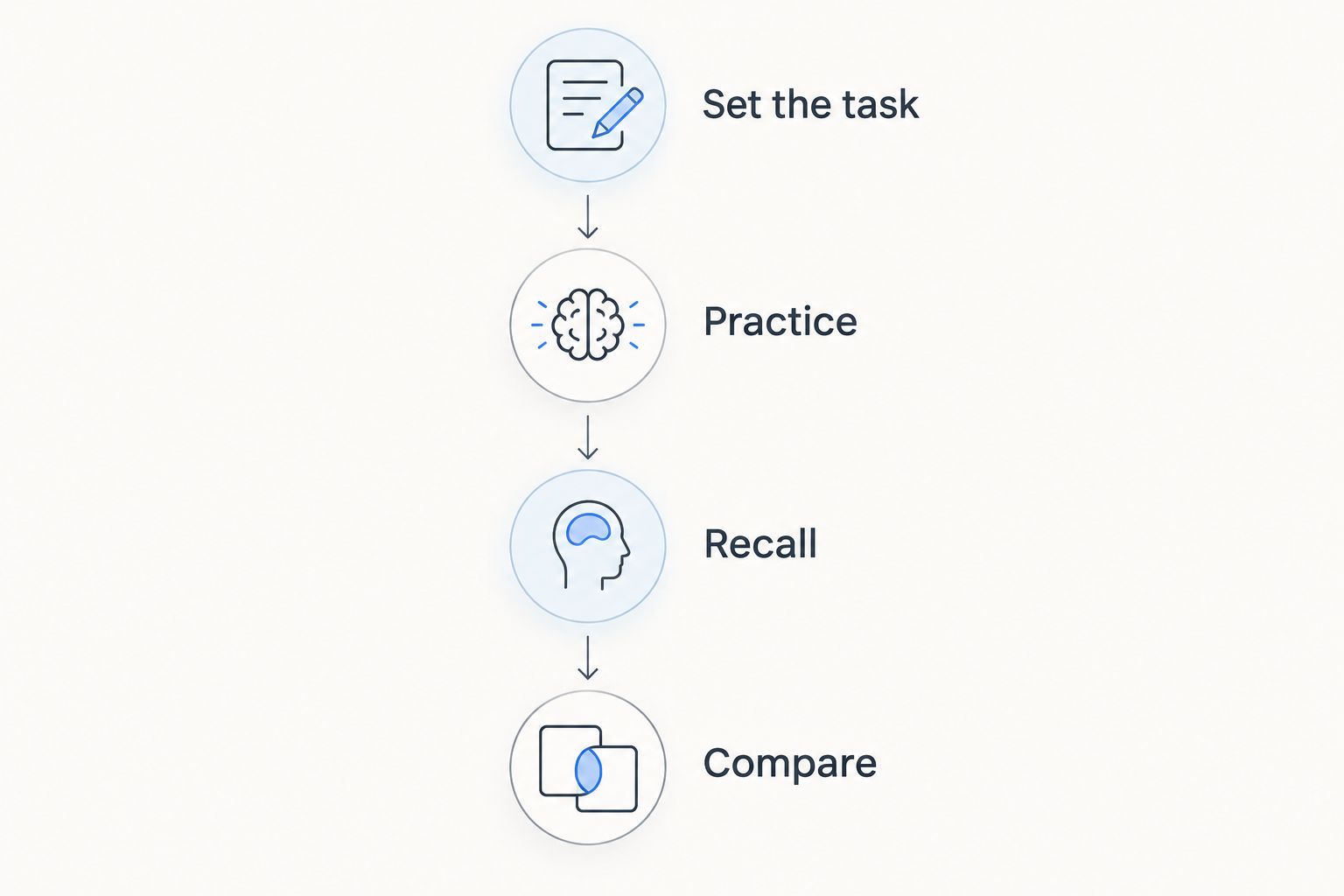
A consistent comparison is more useful than browsing unrelated exercises in each app. Use the following routine as a suggested evaluation method, not a promise of learning results.
Set the task
Choose a situation you genuinely need English for, then write 3 sentences you want to express. Keep the meaning the same across your comparison so you are evaluating support for the same goal.
Practice
Spend 10 minutes using each option's relevant learning format. In a conversation-focused app, work on expressing your meaning; in a flashcard tool, practice retrieving the words or phrases; in a guided course, assess how closely the lesson serves your task.
Recall
Return after 24 hours and try to express the same meaning without looking at your notes. This is a personal comparison exercise, not a standardized proficiency test or a guaranteed improvement schedule.
Compare
Record what required help: remembering a word, choosing a grammatical form, pronouncing a phrase, or responding without a script. Choose the format that addresses the difficulty you actually observed.
Keep the exercise small enough to repeat. One difficult sentence you can explain is a clearer decision aid than a long list of features you never tried.
When staying with Translaio is the right call
Stay with Translaio if it already meets your needs and you cannot identify a specific problem a replacement would solve. Familiarity matters when it keeps your language workflow simple. Switching is not a learning objective.
For 2026, distinguish a replacement from an addition. You can keep a useful existing workflow while choosing a separate format for conversation, vocabulary recall, or structured lessons. Judge the combined routine by what you practice, not by how many apps it contains.
FAQ
What's the best Translaio alternative for Chinese-speaking English learners?
Lingua is the strongest fit here for Chinese-speaking learners who want English vocabulary, grammar, pronunciation, and conversational correction. Its Buddy feature provides a chat/call format for conversation practice.
Which Translaio alternative is best for vocabulary review?
Anki is the best fit here for personalized flashcard review. It uses spaced repetition and lets you create cards around the vocabulary you need.
Is Duolingo better than Anki for learning English?
Duolingo fits guided lessons, while Anki fits customizable flashcard review. Choose based on whether you need a course sequence or a way to remember selected material.
Should I replace Translaio or use another app alongside it?
Keep Translaio alongside another tool if it still serves a useful purpose. Replace it only when your chosen alternative handles the tasks you need to preserve.
Can flashcards replace English conversation practice?
Flashcards do not replace practicing an unscripted conversation. They can support vocabulary recall, but conversation also requires understanding a reply and producing your own response.
How should I compare language apps in 2026?
Compare language apps using the same English task. Check whether each format helps with your main difficulty: vocabulary recall, grammar, pronunciation, or conversation.
What should I check before choosing an English-learning subscription?
Check whether the learning scope, practice format, and subscription terms match your needs. Focus on the activities you will actually use rather than choosing from a feature list alone.
One last thing
Before changing apps, save an example of English you cannot yet produce comfortably. Return to that example when evaluating your next choice. The right alternative earns its place by supporting a task you care about, not by giving you another progress screen.